


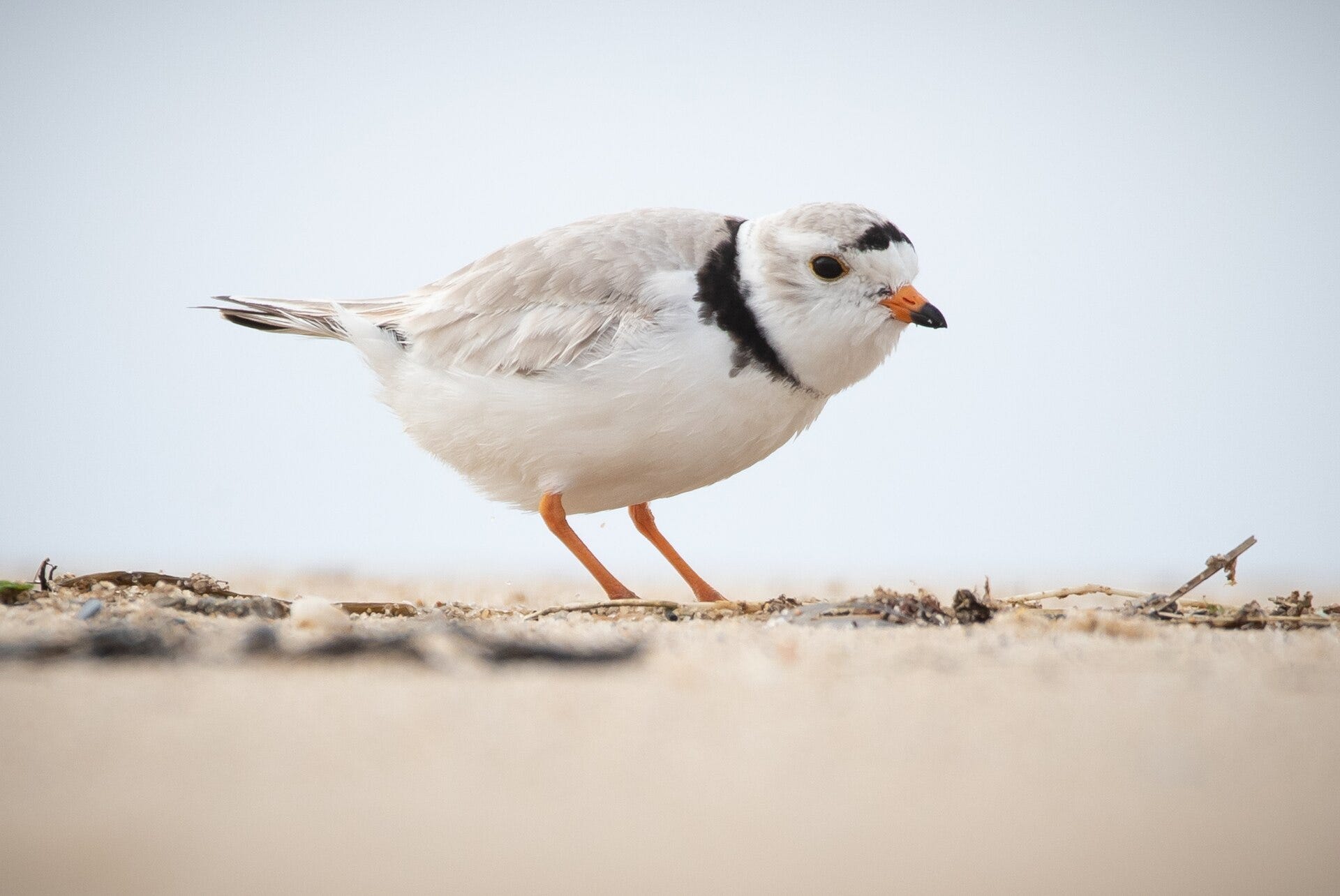
The federal government is reviewing a petition from Ecojustice, filed on behalf of Ontario Nature and Environmental Defence, calling for emergency protection of the Piping Plover habitat at Wasaga Beach under the Species at Risk Act (SARA).
Eleni Armenakis, a spokesperson with Environment and Climate Change Canada (ECCC), said in an emailed statement to The Field & Shutter Press that they are aware of the petition filed and that “At this time, ECCC is assessing the information within the request to determine the appropriate approach.”
The petition, filed on January 27, set a March 1 response deadline, with Armenakis explaining that the assessment “will be conducted in a timely manner, while ensuring that decisions are informed by the best available information.”
The Piping Plover is a small, endangered shorebird that only returned to the province in 2007 and began nesting at Wasaga Beach in 2008.
Mechanical raking threatens Piping Plovers
Ecojustice said in a press release that the groups are concerned that the Town of Wasaga Beach's planned spring mechanical beach raking would destroy critical beach habitat for the Piping Plover, warning that habitat loss at Wasaga Beach would be “catastrophic” for the species.
Beach raking is a maintenance activity that typically uses heavy machinery to drag large rakes across the sand to remove debris. The practice can help remove trash and other unwanted debris, but it also destroys wildlife habitat.
According to Sydney Shepherd, Ontario Piping Plover Program Coordinator with Birds Canada, Wasaga Beach is the most important beach for plovers in Ontario. She said that since 2008, the beach has hosted 59 nests and 87 fledged chicks (a bird that’s able to leave the nest), with over two-thirds of all adult breeding Piping Plovers being hatched at Wasaga Beach.
Within Wasaga Beach, Shepherd highlighted the area east of Spruce Street at Beach One as prime plover habitat.
If the plovers’ habitat were altered, like the proposed mechanical raking, the birds would be left vulnerable to predators, without food, or a place to raise their families, Shepherd explained, adding, “Piping Plover, not just at Wasaga Beach, but all over Ontario, rely on the continued success of nesting at Wasaga Beach.”
Town provides response, some questions remain
In an emailed response to questions asked by The Field & Shutter Press, Sandra Watts, Director of Strategic Communications & Intergovernmental Affairs for the Town of Wasaga Beach, said they are still developing plans for Beach One, which, “includes careful consideration of environmental impacts and collaboration with relevant partners to ensure that species at risk, such as the Piping Plover, are protected.”
In a statement provided by Watts, Wasaga Beach Mayor Brian Smith said the plan is for the town to become a four-season, nature and recreation-based destination that “protects, celebrates, and educates people about the rare dunes, wildlife, and heritage that make Wasaga Beach so unique.” He added that there are “no plans to build on the beach” and that “no sensitive habitat is being threatened.”
However, the Town did not directly respond to questions about whether mechanical beach raking or grooming is planned within Piping Plover habitat at Beach One, or what specific protection measures would be in place during the upcoming nesting season.
In 2019, the Town of South Bruce Peninsula was fined $100,000 by the province after raking and bulldozing part of Saugeen Beach (Sauble Beach) where Piping Plovers were nesting, CTV News reported.
How Piping Plover protections have shifted
These concerns are heightened by recent shifts in Wasaga Beach land management that have altered the protections previously in place for Piping Plovers.
The Piping Plover habitat was protected as part of Wasaga Beach Provincial Park. Dedicated Ontario Parks staff and volunteers maintained nesting areas, effectively guarding individual nests and using specialized fencing that allowed plovers access while keeping people out, explained Phil Pothen, lawyer and Program Manager for Land Use and the Ontario Environment at Environmental Defence in an interview.
That protection was recently lost when the Ford government moved to transfer the land, which includes Beach One, despite substantial public opposition, with more than 98% of feedback during the consultation opposed.
The beach transfer is part of a Ford Government plan to revitalize tourism for Wasaga Beach.
Pothen believes the transfer could proceed without losing those protections. “Everything that they’ve said they want to do, they can do without this transfer, and they can certainly do it without harming the piping plover.”
In addition to the protections under Provincial Park status, the Piping Plover previously had provincial protections under the Endangered Species Act, now replaced by the Species Conservation Act.
The province has said the change was intended to avoid duplication, since Piping Plovers are also covered by federal species-at-risk legislation, said Tony Morris, Conservation Policy and Campaigns Director at Ontario Nature, in an interview.
He added, however, that it is not accurate to call the protections duplicative. “The federal government has often been reluctant to implement the Species at Risk Act effectively, particularly in areas under provincial jurisdiction.”
From the federal perspective, Armenakis noted, the responsibility for conservation is shared by the different levels of government: “The Government of Canada first looks to the provinces and territories for the protection of terrestrial species’ habitat on non-federally administered lands.”
She also explained that SARA aims to prevent species from becoming extinct or extirpated, where a species disappears from a region, as a result of human activity, and to manage species of special concern to prevent them from becoming threatened or endangered.
“The emergency order tool under the Species at Risk Act (SARA) was specifically designed for these types of urgent situations where a species is facing imminent threats to its survival or recovery,” said Kegan Pepper-Smith, a lawyer with Ecojustice, in a release.
Pothen described the situation as “a very slam dunk circumstance,” speaking of federal intervention and the issuance of the protection order. “The minister is the watchdog. The burglar is at the gate. It’s time for the minister to bite.”
You may also be interested in

Editor’s Note:
This article was updated on February 10, 2026, at 1:45 p.m. EST to correct the location of the Piping Plover nesting area at Wasaga Beach. Birds Canada clarified that the habitat is east of Spruce Street in Beach Area 1, not west as previously reported. At 5:11 p.m. EST, the article was further updated to correct a quote from Phil Pothen; the Minister was urged to "bite," not "fight."
Follow the Field & Shutter Press
Instagram | YouTube | BlueSky
Have a tip, story idea, event, or want to appear as a guest column? Contact us.