


The Ontario government is systematically undermining the public’s right to participate in environmental decision-making, Ontario’s Auditor General, Shelley Spence, warned in her 2025 Annual Report released on Tuesday.
The annual report reviews the government’s operation of the Environmental Bill of Rights (EBR), which this year contained a stark overview stating that government actions are “eroding Ontarians’ EBR rights and opportunities to participate meaningfully in the government’s environmental decision-making” through legislative exemptions, administrative failures, and non-compliance with its own legal duties.
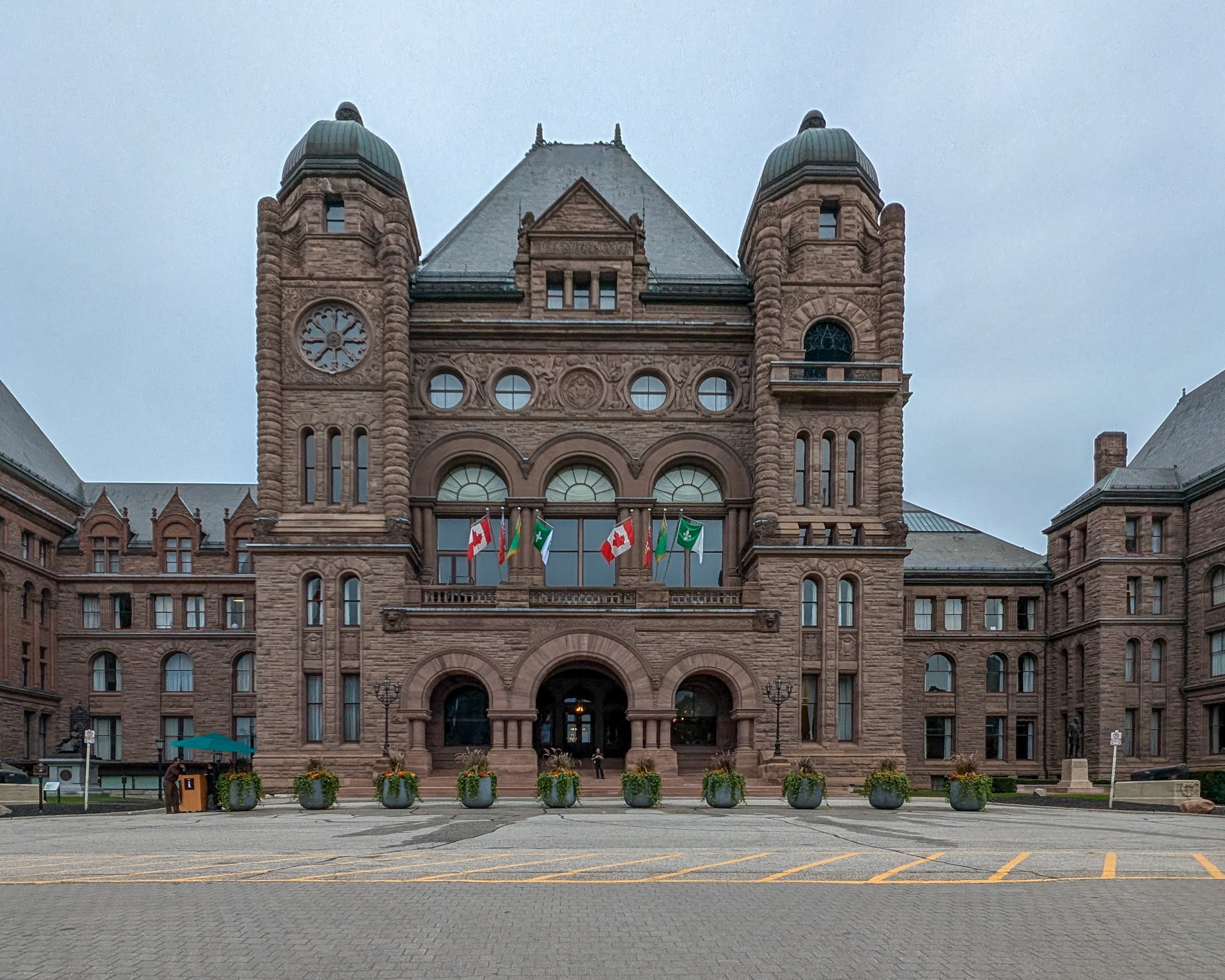
“Over and over again, the auditor general, not only in this report, but in previous reports, have showed the utter disregard by this government for the Environmental Bill of Rights,” said Mike Schreiner, Leader of the Ontario Green Party, during a press conference at Queen’s Park on Tuesday.
The EBR intends to help protect Ontario’s environment by allowing the public to have a voice in decision-making, to request investigations, and to appeal certain government decisions affecting the environment.
The Premier’s Office did not respond to requests for comment prior to publication. However, the Ford government has consistently defended its legislative approach, arguing that the changes are necessary to accelerate critical infrastructure and housing development across the province.
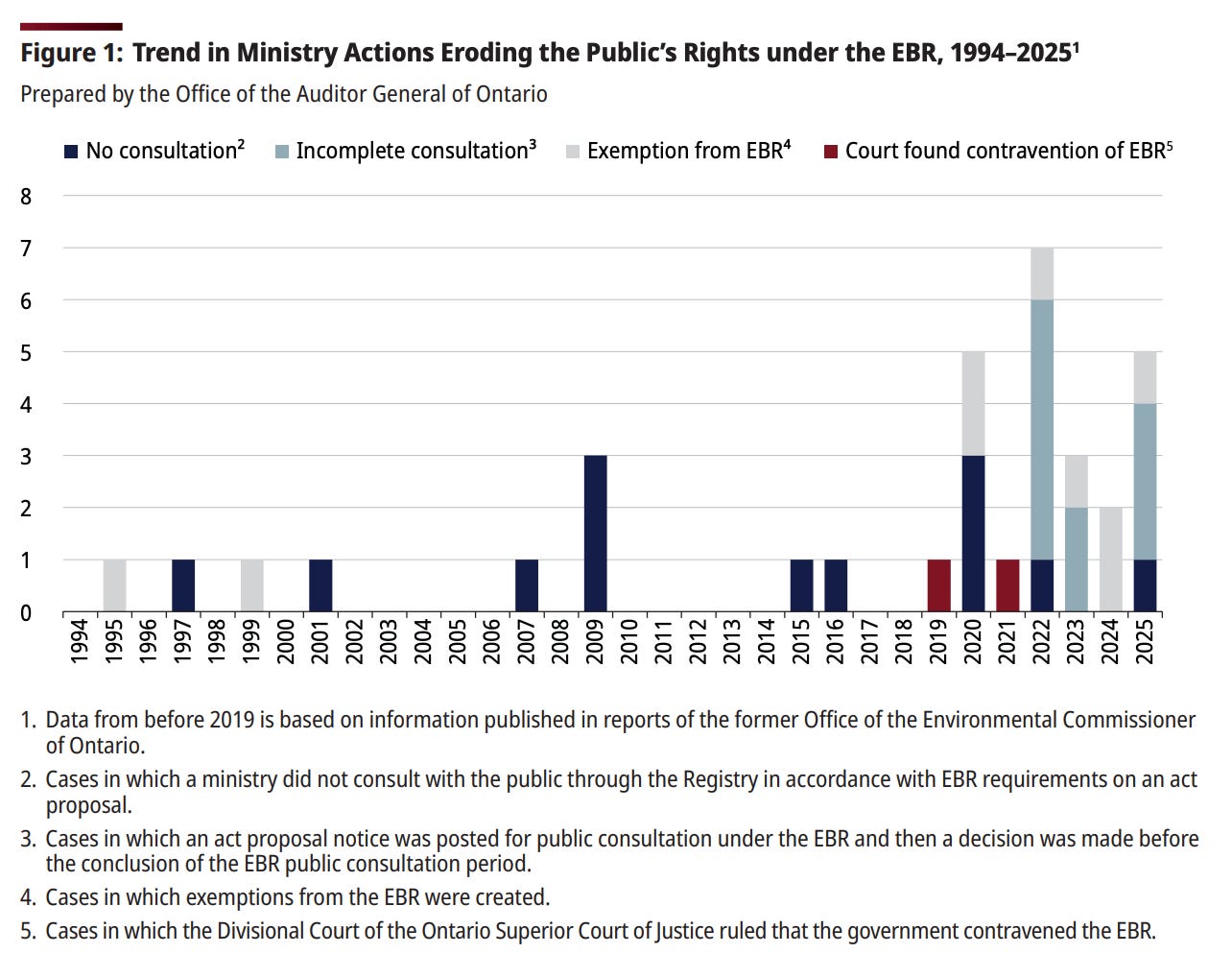
“In particular, since 2019, the Province has been taking actions that had rarely or never been taken since the EBR was enacted in 1994 (see Figure 1),” reads a line in the report.
Public Not Being Consulted
The Auditor General found that the Ford Government did not consult Ontarians about changes to the Ontario Building Code Act included in Bill 17, the Protect Ontario by Building Faster and Smarter Act, 2025, where the Ford Government passed a “legislative amendment meant to prevent municipalities from creating and enforcing their own green building standards,” the report stated.
Ministries prescribed under the EBR must post proposals to the Environmental Registry of Ontario for 30 days for any decisions that could significantly impact the environment. This was not done before the Bill was passed.
According to the report, the Ministry justified the lack of consultation by stating the amendment was merely an explanatory measure with no substantive change to existing legislation.
“Instead, the public, which showed a high level of interest in this environmentally significant proposal, was deprived of the EBR right to participate in decision-making,” the Auditor General’s report said.
Government Ignores Feedback
The Auditor General also found that feedback from the Ontario Environmental Registry is not being taken into account.
The Ministry of Municipal Affairs and Housing and two other ministries submitted proposals to the Ontario Environmental Registry regarding different aspects of Bill 17, posting them on May 12, 2025, and May 13, 2025.
However, Bill 17 passed on June 3, 2025, which was less than the required 30-day consultation period. Despite the Bill passing, the Ford Government continued soliciting feedback, even though it wouldn’t be considered.
As a result, the Auditor General found that 70% of the comments received on the proposed changes were not considered because they were submitted after the Bill had passed.
“This is the fourth year in a row that we have found that the Municipal Affairs Ministry did not consult the public for the minimum 30 days required by the EBR before environmentally significant changes to an act were made, and did not consider all public comments in decision-making,” said the report.
Mike Schreiner, leader of the Ontario Green Party, said during a press conference on Tuesday regarding the report, “It’s outrageous that this government continues to ram through legislation, disregard the Environmental Bill of Rights and silence the voice of Ontarians.”
Right to Know Shrinking
The right to know about and participate in environmentally significant decisions applies only to Ministries and projects designated under the Environmental Bill of Rights (EBR).
But the Ford Government has been increasingly passing legislation to bypass the EBR’s requirements, with the Auditor General’s report saying, “This is part of a larger trend that we have noted in recent years of certain laws and projects being exempted from the EBR.”
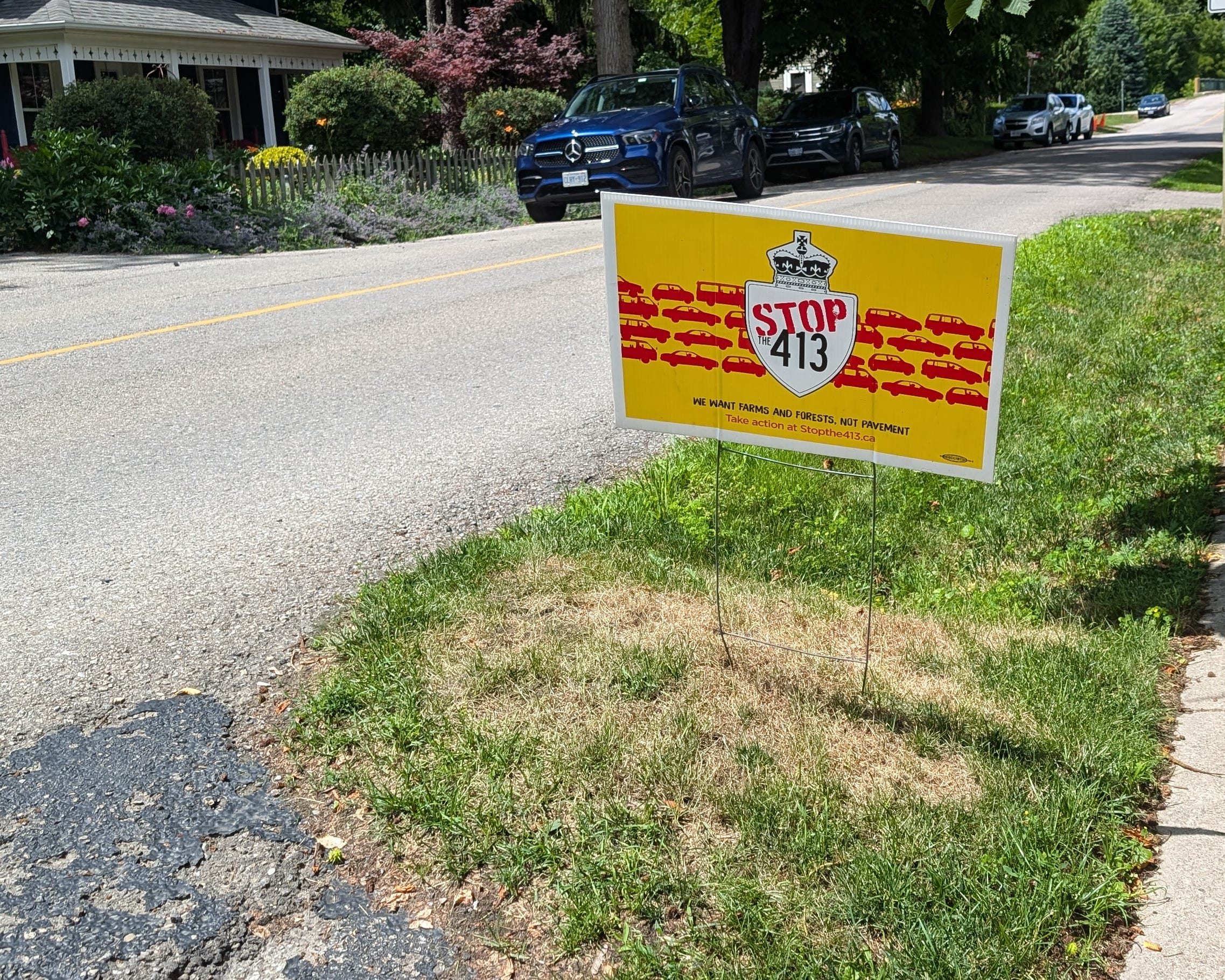
Specifically, the Ford Government has passed exemptions for Ontario Place and Highway 413, and has proposed exempting the new Species Conservation Act.
Keeping Ontarians In The Dark
The Ford Government, through the Ministry of the Environment, Conservation and Parks (MECP), is legally obligated to inform and educate Ontario residents about the EBR and its use. The Auditor General says the Ford Government continues to fail in that regard.
The Auditor General mentioned in the report that the MECP does not have any dedicated public education staff for the EBR, but “found that other provincial bodies that educate the public about their rights have dedicated units to lead their public education, outreach and engagement work.”
In 2020, the Auditor General recommended that the MECP develop and implement a plan to educate Ontarians about the EBR. A plan was finalized in 2022 to “raise public awareness of the EBR and educate Ontarians on their rights and how they can participate in government decision-making,” the report said.
Despite having a plan in place, Ontario has seen an “80% decline in EBR-related posts on [the] Ministry’s social media between 2021/22 and 2023/24,” according to the report, with the report adding that, “The Ministry did not undertake any EBR-related education activities in 2024/25.”
The Auditor General recommended that by July 2026, the MECP “finalize and implement a new plan for providing ongoing educational programs about the EBR, including implementation timelines and performance targets for each key action identified,” and that the MECP also dedicate an individual or group on staff to educate the public.
“A lack of public awareness and education about the EBR means that Ontarians cannot effectively participate in government decision-making when those decisions are likely to have significant impacts on the environment,” said the Auditor General in the report.
Even when notices are posted about government decision-making, the Auditor General found that “22% did not explain the potential environmental impacts of the proposals,” and some proposals mentioned only the expected benefits.
The results of the 2025 Environmental Bill of Rights operations audit continue to show that the Ford Government is falling short of its legal duties to inform Ontarians and involve them in environmentally important decisions.
Follow the Field & Shutter Press
Instagram | YouTube | BlueSky
Have a tip, story idea, event, or want to appear as a guest column? Contact us.