


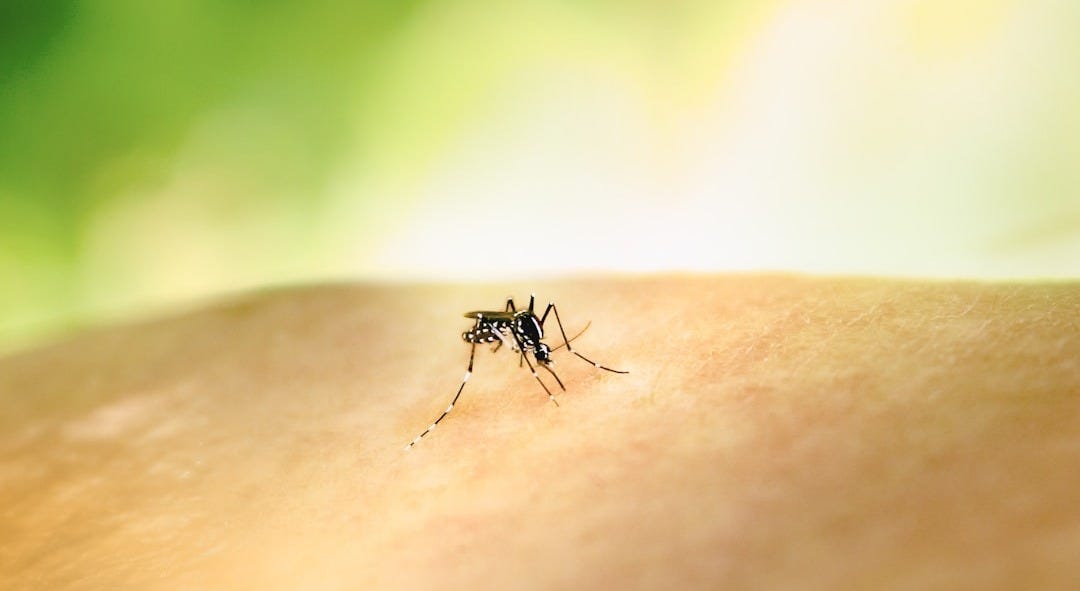
As the summer heat sets in, public health officials at Halton Region have confirmed the first positive mosquito pool of the season in Oakville during the week of June 29, prompting reminders for residents to drain standing water and take precautions against mosquito bites.
Last year’s first positive mosquito pool was detected on July 18, 2025, about two weeks later than this year’s first confirmation. In total, 28 positive mosquito pools were detected in Halton in 2025.
West Nile virus is spread through the bite of an infected mosquito. “Mosquitoes become infected by feeding on an infected bird. If an infected mosquito bites you, it may pass the virus onto you,” according to the Province of Ontario.
A mosquito pool is a group of female mosquitoes all of the same species, which can range from 1 to 50, and are then tested by public health units, such as Halton’s.
So far, there have been no reported cases of West Nile virus in Ontario this year, according to Public Health Ontario’s Vector-borne Disease Tool. However, last year in Halton, there were 8 confirmed West Nile virus cases, including one death, according to statistics published by the Region.
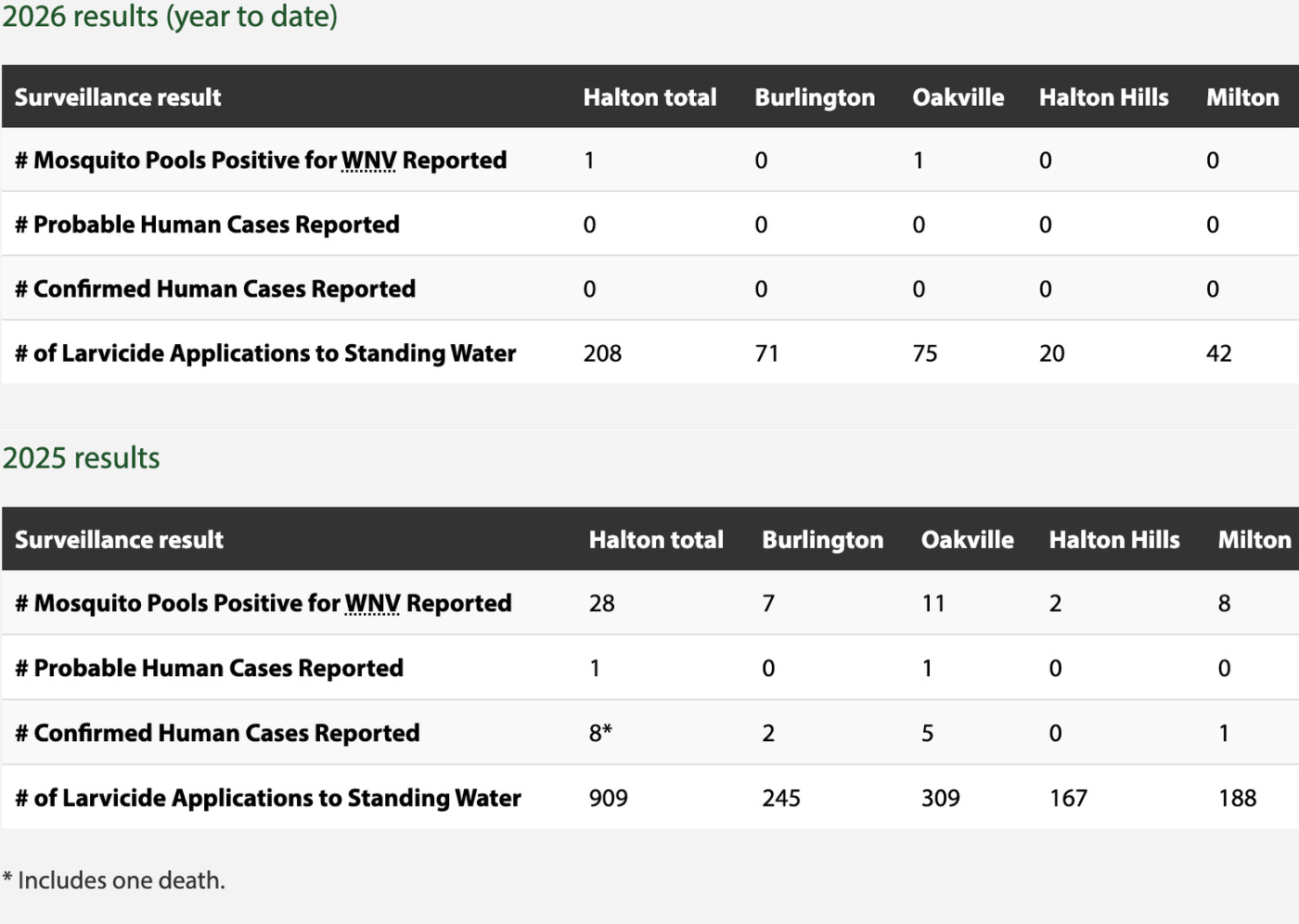
Mosquitoes that carry the virus commonly breed in urban areas in standing water, such as bird baths, pots, and tires. So far, the Region has conducted 208 larvicide applications year-to-date to kill mosquito larvae and completed 909 applications in the previous year.
For bird baths, they recommend changing the water once per week to reduce the risk of mosquitoes.
The Region has said that “most individuals infected with [West Nile virus] do not develop any symptoms while some may develop fever, headache, body aches, joint pains, vomiting, diarrhea or rash. The majority of individuals will recover completely, but a few may go on to develop severe illness affecting the central nervous system. Individuals with certain medical conditions, such as cancer, diabetes, hypertension, kidney disease and individuals over 50 years of age are at higher risk for severe disease.”
It is recommended residents reduce their risk of mosquito bites by wearing long sleeves and pants outdoors during dusk and dawn, using an approved insect repellent containing DEET or icaridin, eliminating standing water around their homes where mosquitoes can breed, and ensuring window and door screens are in good repair.
From May to late September, the Region accepts complaints about standing water at public facilities. “To be considered standing water, the conditions must persist for seven or more days,” the Region states. Concerns can be reported through 311. For standing water on private property, the Region advises contacting your local municipality.
For more information about West Nile virus in Halton, visit the Region’s website.
Follow The Field & Shutter Press
Instagram | YouTube | BlueSky
Have a tip, story idea, event, or want to appear as a guest column? Contact us.