


This article was originally published by Natasha Bulowski, a Local Journalism Initiative Reporter with Canada’s National Observer.
A Mississauga man’s legal victory over the city’s lawn bylaws sets an important precedent for Canadians looking to replace their grass lawns with pollinator and habitat gardens.
On Jan. 6, the Ontario Superior Court of Justice ruled that the City of Mississauga’s nuisance weed and tall grass bylaws violated resident Wolf Ruck’s Charter right to freely express himself in the form of a naturalized garden. The bylaws prohibited grass higher than 20 centimetres and restrictions on growing some nuisance weeds, including sow thistle. The bylaw applied to Ruck’s property but have now been ruled unconstitutional.
This “is an excellent precedent” that “can be carried across Canada,” Ontario-based environmental lawyer David Donnelly told Canada’s National Observer in a phone interview.
“It’s a very significant step forward because the decision is so clear and unequivocal.”
Also, the fact that Ruck won even though he represented himself in court gives “a pretty clear indication of how bright the line is with respect to the constitutional protection,” Donnelly said.
“If a layman can go into court and win on this point then it’s probably pretty clear what the law is.”
City staff are still reviewing the decision and considering next steps, according to an emailed statement from the City of Mississauga.
Ruck, who is retired, fought his own case because he couldn’t afford a lawyer, and is relieved at the ruling.
“When I look out at my yard at sunset … It’s just beautiful. It’s like a park,” Ruck said in a phone interview with Canada’s National Observer. “All of these plants that are resident on my property, they’re also resident in the local parks here.”
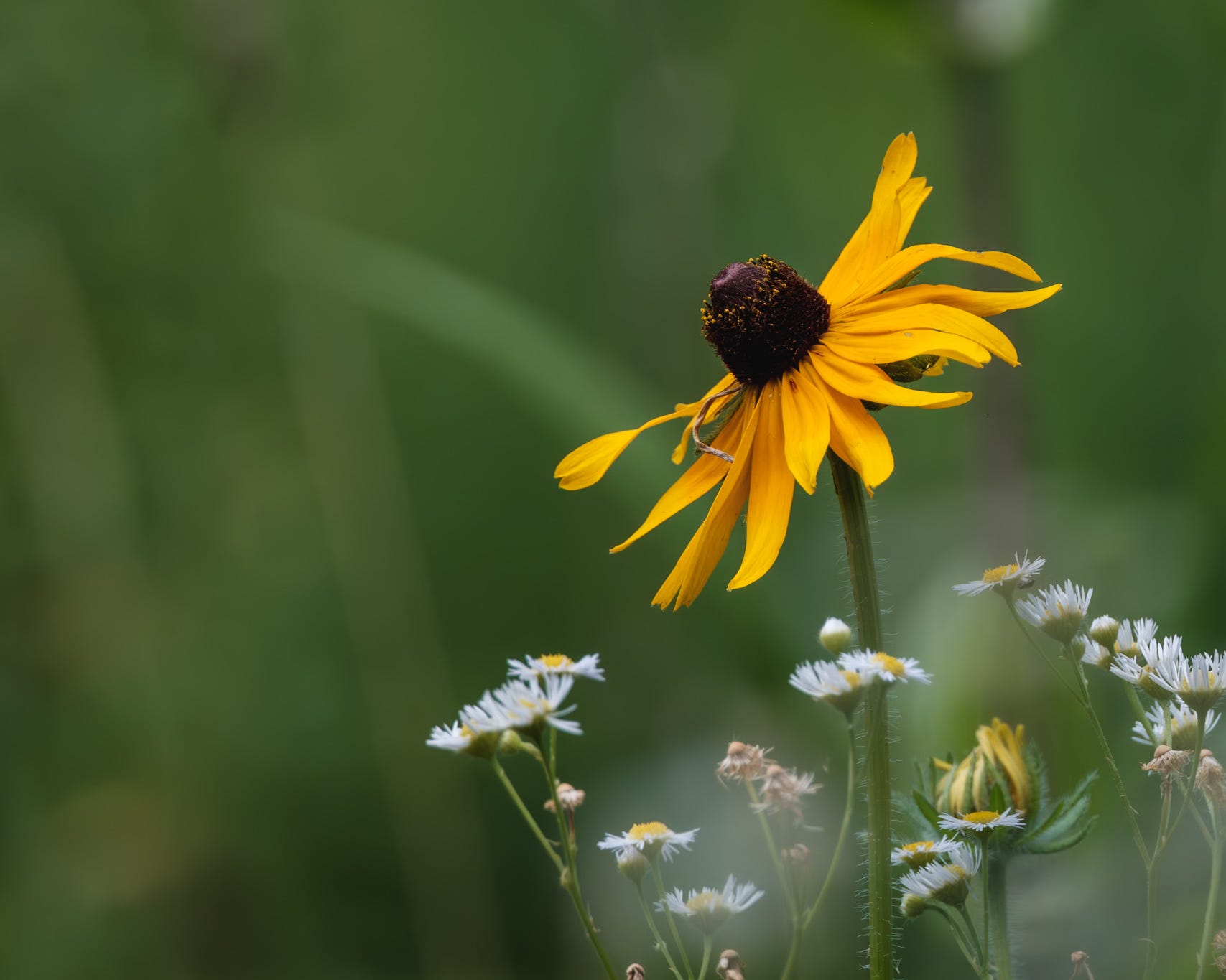
Ruck doesn’t “grow” a garden in the traditional sense, he lets nature take its course. When bird droppings and the wind carry new seeds into his yard, he lets them take root, occasionally supplementing with local seeds plucked from nearby trails, like woodland sunflowers. Goldenrod, sow thistle, black-eyed susan, columbine and sedges proliferated naturally and he carefully mows the turf lawn around these plants, taking care not to cut them down.
Many people opt for a natural lawn because it’s a way for an individual to help tackle biodiversity decline and climate change, Ruck said. But city bylaws can land people in hot water and most people don’t have the time or money to take it to court, he added.
He and other natural garden advocates hope this ruling will serve as a warning to municipalities across the country.
Ruck is not the only Canadian to take legal action to protect a naturalized lawn.
Donnelly is currently co-representing Burlington resident Karen Barnes who, like Ruck, has had her property destroyed by the city for growing a natural garden. Barnes is currently in Provincial Offences Court challenging the $400,000 in fines levelled by the city for violating a bylaw order to cut down her lawn.
“I would hope that Burlington would have the good sense to read this decision and then withdraw the charges against Miss Barnes,” he said.
A study of a municipal project in Vancouver showed that simple changes to maintenance, such as letting the grass grow, can boost biodiversity and bring more wildlife into urban spaces. Beyond giving pollinators a much-needed hand, habitat gardens and natural lawns have myriad benefits.
Climate change — driven largely by humans burning fossil fuels like coal, oil and gas — is leading to more intense heat waves and gardens, trees and greenery have a cooling effect that helps keep temperatures down, particularly in cities. Fossil fuel use also increases the frequency of extreme weather, including rainfall, and local plants have deeper roots than turf grass that help absorb excess stormwater and reduce soil erosion.
Compared to a traditional turf grass lawn, these natural gardens require far less water, sequester more carbon and are easier to maintain.
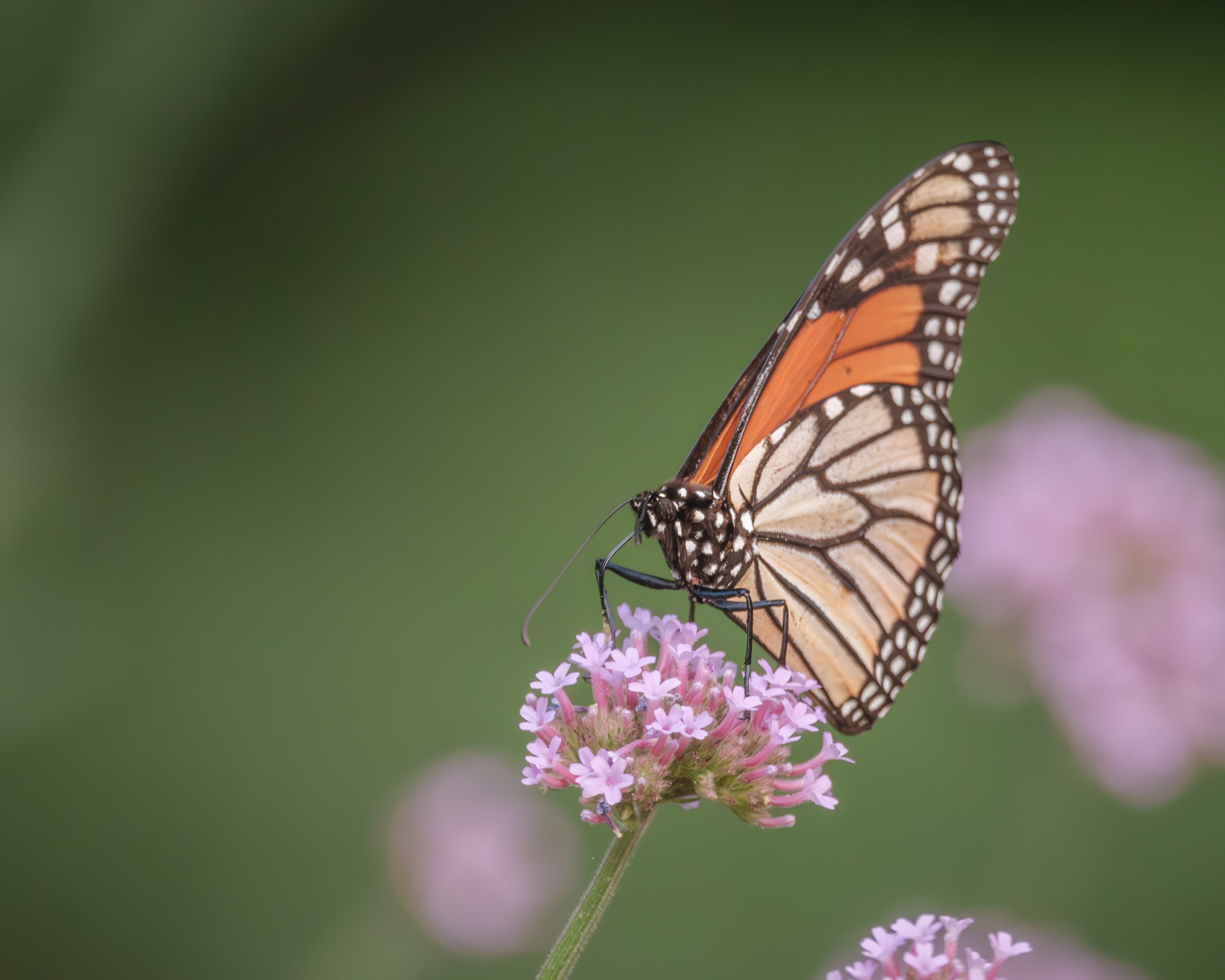
“Habitat gardens’‘ are designed to attract wildlife and pollinators (like bees and butterflies) and are cared for differently than a standard lawn and garden.
Instead of raking fallen leaves, you might leave them to decompose over the winter as part of the natural cycle. It’s the same with old plant stems or other plant material, such as logs. But sometimes neighbours object to the perceived “messiness” of decomposing plants on a lawn — and many municipalities have bylaws that discourage these practices with measures including height restrictions.
Natural lawn advocate and author Lorraine Johnson says this court ruling doesn’t mean people will have free reign to let their yards run totally wild; most municipalities have bylaws that prohibit certain noxious plants, like poison ivy, and have important safety provisions to keep yards in check, for example, ensuring access to fire hydrants and preserving sightlines so pedestrians are visible to cars.
“What might look wild to someone isn’t necessarily an abandoned and neglected yard,” Johnson said. “The aesthetics of naturalisation are perhaps not conventional aesthetics.”
Municipalities can write bylaws in a way that would allow people the freedom to have a naturalized garden while still maintaining health and safety standards, she said. For instance, the City of Kingston changed its bylaws last year to remove aesthetic terms and create a list of prohibited plants, so enforcement officers have clear instructions to follow. Every municipality is slightly different: the City of Vancouver doesn’t restrict grass height and uses vague language to require yards be kept to the “prevailing standard of the neighbourhood.”
The neighbouring City of Surrey, on the other hand, imposes a 20 centimeter grass limit and requires the removal of dead, diseased, dying or dangerous portions of trees or plants.
“Subjective aesthetic terms like ‘untidy’ should be weeded out of bylaws,” Johnson said. “They’re completely arbitrary.”
The Ruck court ruling adds to a handful of other legal victories for natural lawns. In 2002, Douglas Counter took the City of Toronto to court and won after it removed plants from his natural garden, which extended onto city land. Earlier, in Bell v. City of Toronto in 1996, Sandy Bell successfully invoked her Charter right of freedom of expression to save her natural garden.
“In the Sandy Bell case, the Judge ruled that vague, subjective and arbitrary terms like ‘excessive’ were ‘void for vagueness’ and ‘unenforceable,’” Johnson added.
— With files from Matin Sarfraz
Follow the Field & Shutter Press
Instagram | YouTube | BlueSky
Have a tip, story idea, event, or want to appear as a guest column? Contact us.