


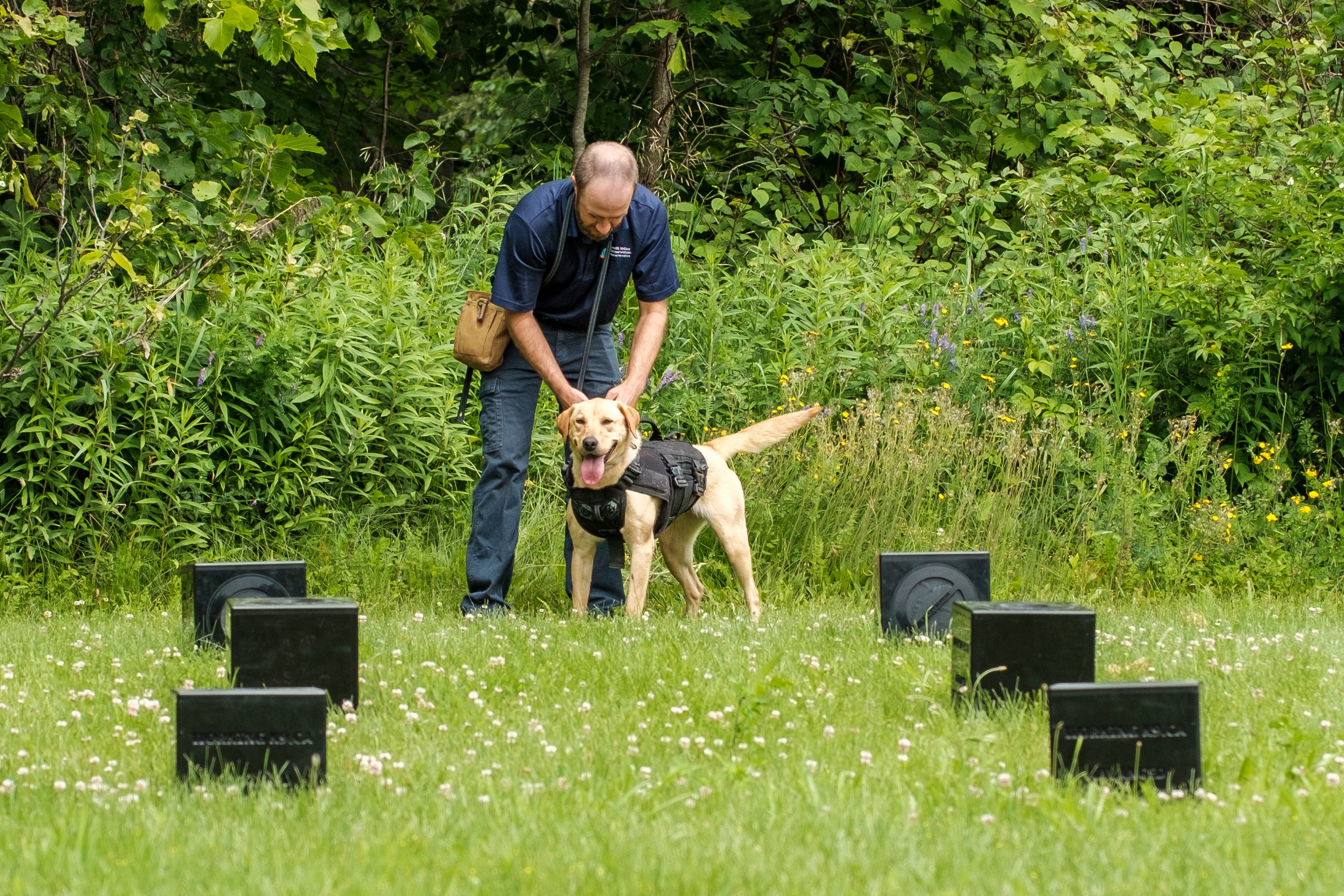
To protect ecosystems within the Credit Valley watershed from devastating pests, Credit Valley Conservation (CVC) is turning to a powerful biological tool: a dog’s nose.
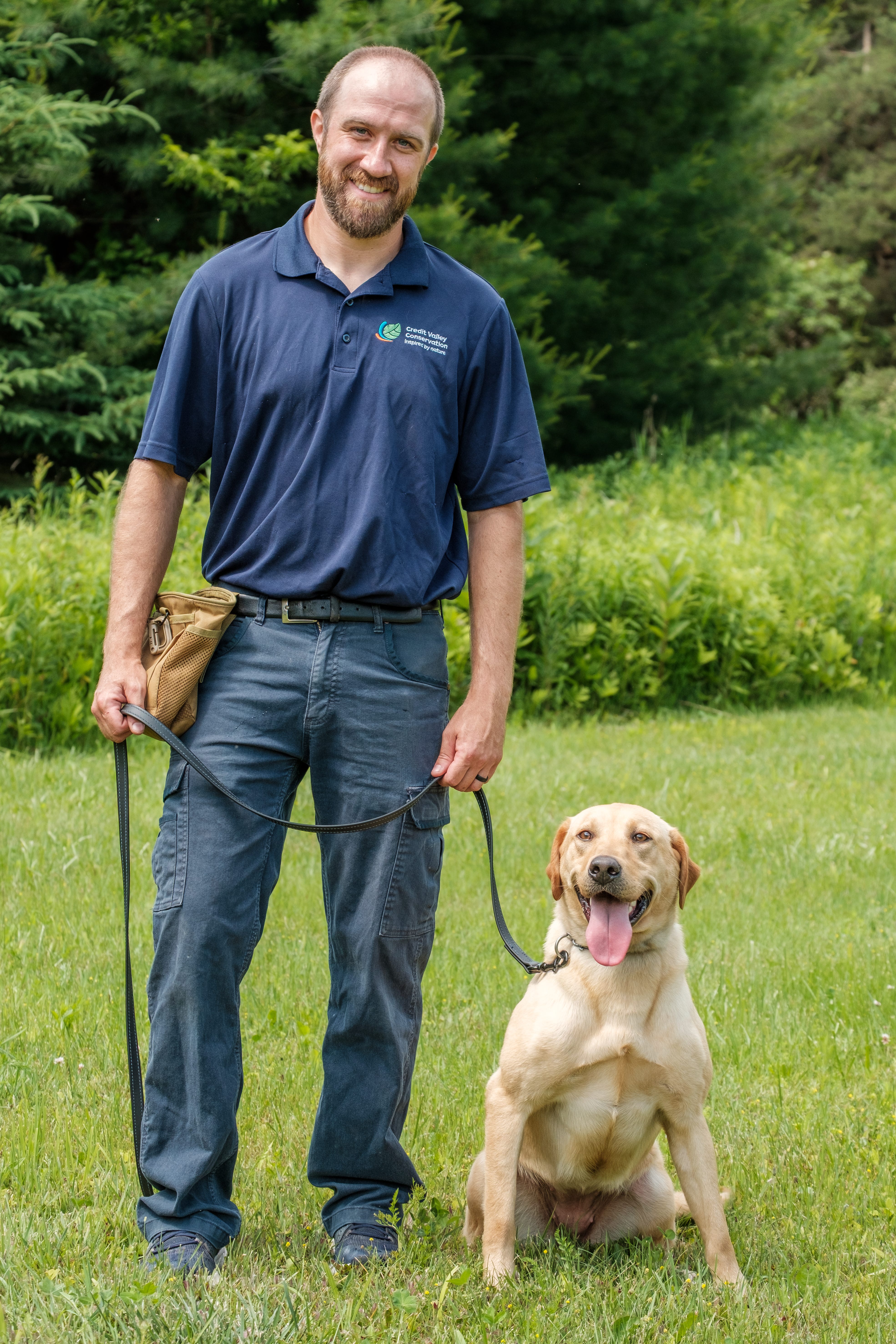
Tilly, a highly driven two-year-old Labrador Retriever, is “at the heart of the program,” which recently launched in partnership with Credit Valley Conservation Foundation (CVCF), according to a press release.
CVC says this “first in Ontario innovation” moves beyond conventional field surveys. Armed with 18 months of specialized training — and an extraordinary sense of smell — Tilly's job is to detect invasive species before they spread.
Right now, she’s focusing on three high-priority threats:
Hemlock Woolly Adelgid - A tiny insect that slowly kills Eastern Hemlock trees by attaching to the base of their needles and sucking out water and nutrients.
Spotted Lanternfly - An insect from Asia that weakens crops and native hardwood trees by feeding on their sap.
Red Swamp Crayfish - An aggressive crustacean that can outcompete native aquatic species and causes shoreline erosion by digging destructive burrows into riverbanks and drainage ditches.
“The two insects have not yet been detected in the watershed, but they are moving closer and potentially could be introduced to our watershed, so we want to find them right when they get here so we can react,” said Lee Merrill, CVC’s Terrestrial Invasive Species Specialist and Tilly’s primary handler. “The [Red Swamp] Crayfish was just found in Mississauga last year for the first time, so we’re going to use [Tilly’s] skills to get an idea of distribution to see what we might be able to do as far as implementing management.”
Traditionally, looking for these hidden threats requires tedious, needle-in-a-haystack inspections by conservation staff. For pests as tiny as the Hemlock Woolly Adelgid, human eyes can miss the early signs of infestation before it takes hold. Tilly changes that.
“We don’t need a team of staff out there inspecting a whole forest,” Merrill said. “She can go in, and she’s much more efficient. She can cover a lot more ground, and she can find things earlier.”
Bred for the Brush
Choosing the right pup for the job came down to specific genetics and personality traits. During a field demonstration, Tony Pallotta, Working K9’s Founder and Head Trainer, the company working with CVC to train Tilly, explained that she was selected because “we wanted the most playful, the most outgoing, the most bold puppy we can find so we can channel all of that energy… [we want] a driven dog, a dog that really wants to work.”
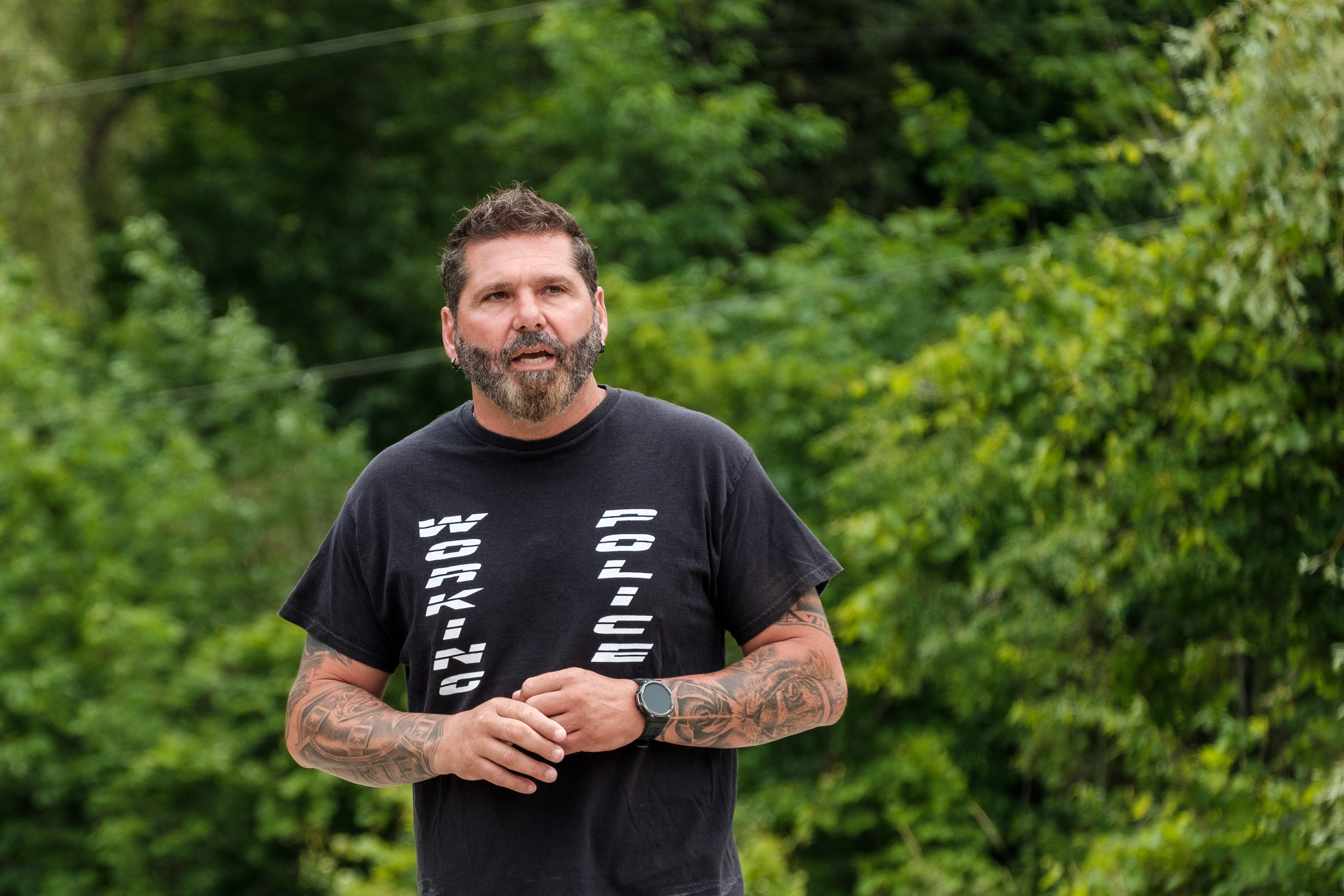
Tilly has been training at the Working K9 facility since she was just eight weeks old. Now, after 18 months of preparation, the two-year-old lab is transitioning to active duty. She will spend her career working alongside dedicated CVC handlers at priority conservation areas.
Leveraging a sense of smell much more sensitive than a human’s, Tilly was exposed to her target scents slowly, first by being fed directly over the source odour to lock them into her memory.
During the colder months, when snow made outdoor training impossible, the Working K9 team had to get creative. Pallotta’s solution was to build an indoor training table that mimicked a natural shoreline, layering it with gravel and sand. This helped Tilly practice detecting the burrowing Red Swamp Crayfish. By screwing mason jar lids containing the target scents underneath the table and drilling holes through the surface, the target odours could drift up through the sediment.
“Tilly was working all winter on this table, finding these target odours and indicating [even] when there was two feet of snow outside,” Pallotta explained.
The innovation doesn’t stop there. Knowing Tilly would need to be protected when working in dense, rugged environments, Pallotta designed a specialized, high-tech vest for her to wear while on duty. The vest uses D3O protective material, remaining flexible while Tilly moves but hardening instantly on impact.
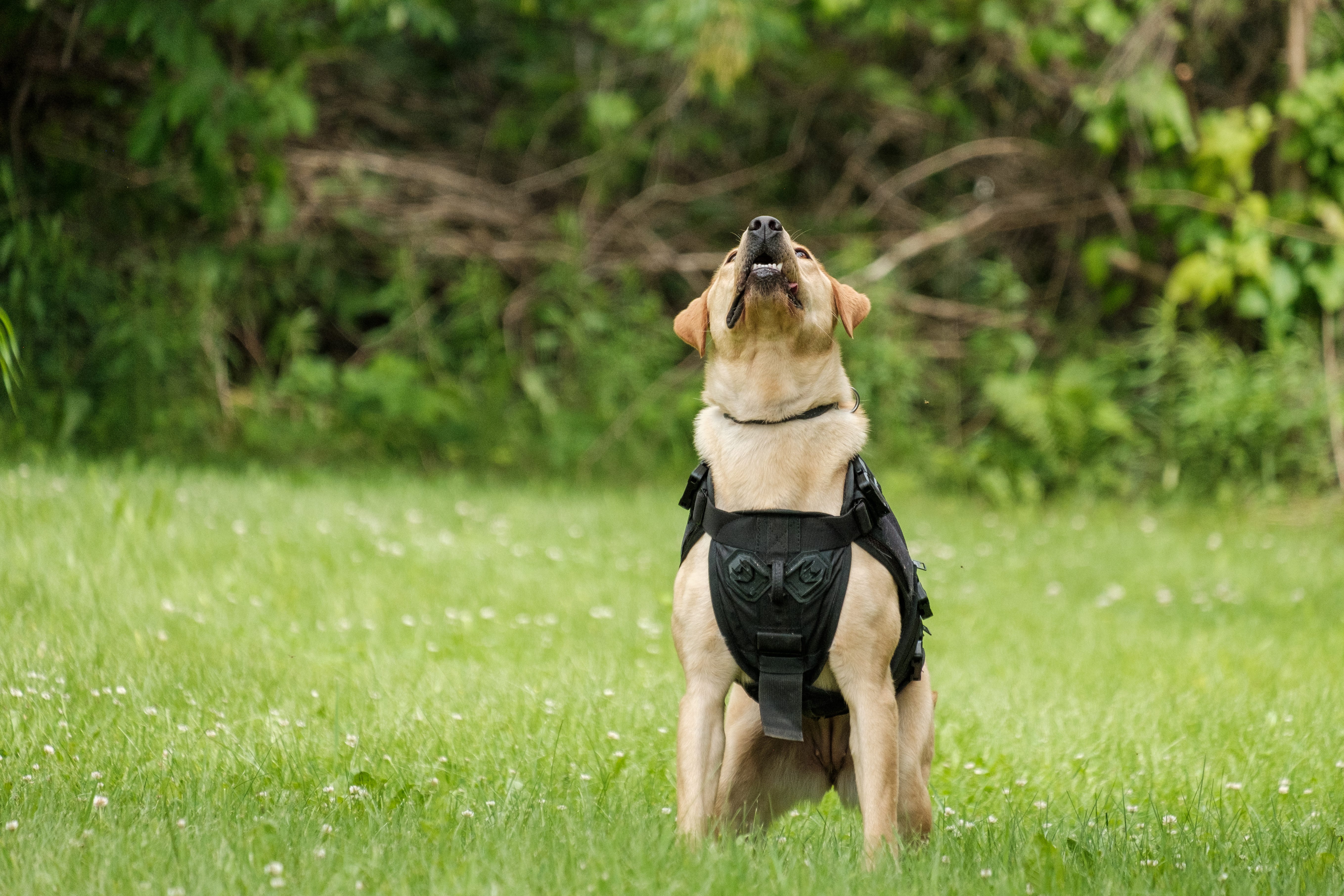
She’s also being trained to wear clear, protective dog goggles to prevent thorns, brambles, and thick brush from scratching or poking her eyes.
Mapping the Scent Cone
During a live field demonstration, Tilly showcased exactly how she narrows in on a target. First, she ran a foundational exercise using nine specialized black boxes on the ground, completely ignoring “distractor odours” like native crayfish or non-invasive insect eggs. The moment she found the box containing her target, she froze, locking up stiffly with her nose pointed directly at the source.
“Labrador Retrievers are not pointers,” Pallotta explained. “We had to teach her how to point like a German Shorthaired Pointer may point in a hunting application.”
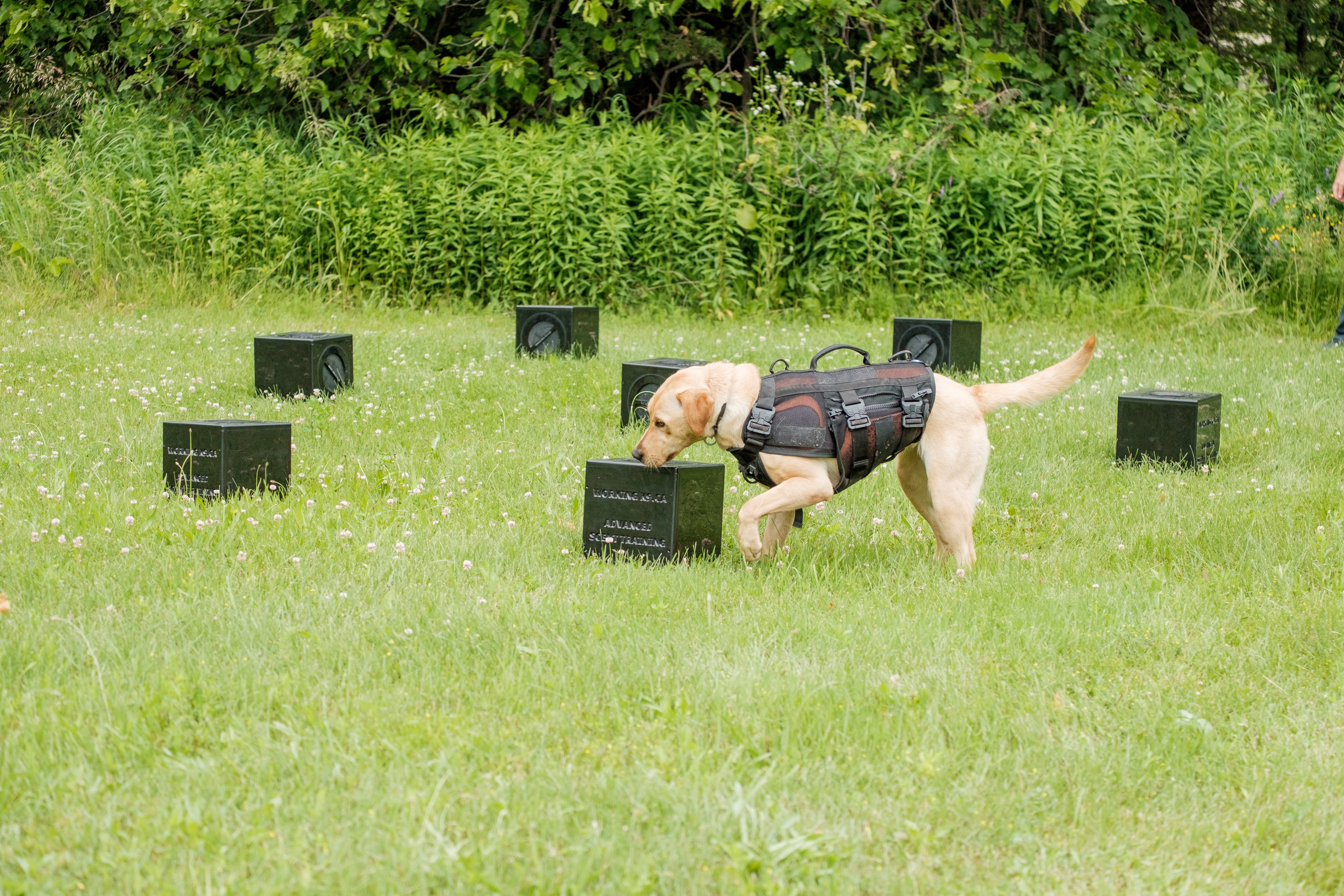
Because Tilly is working in sensitive environments, she can’t scratch or dig at a target. Her indication that she has detected a target odour is more passive. Pointing ensures she doesn’t accidentally damage delicate habitats while doing her job.
When she moved into the tree line to demonstrate a more realistic wilderness search, her strategy shifted to tracking the air. For Tilly, the wind is an advantage, allowing her to weave back and forth to find the “scent cone.” According to Pallotta, by comparing the scent entering each nostril — left or right — Tilly can adjust her path toward the target odour. This is important because if a pest like Hemlock Woolly Adelgid is high up in the canopy, the odour may not be on the trunk; it’ll settle dozens of feet away.
“She’s not going to run right up to the trunk of the tree and say ‘it’s here’, because that odour may be falling from the canopy and landing on the ground 30, 40, 50 feet away,” Pallotta said.
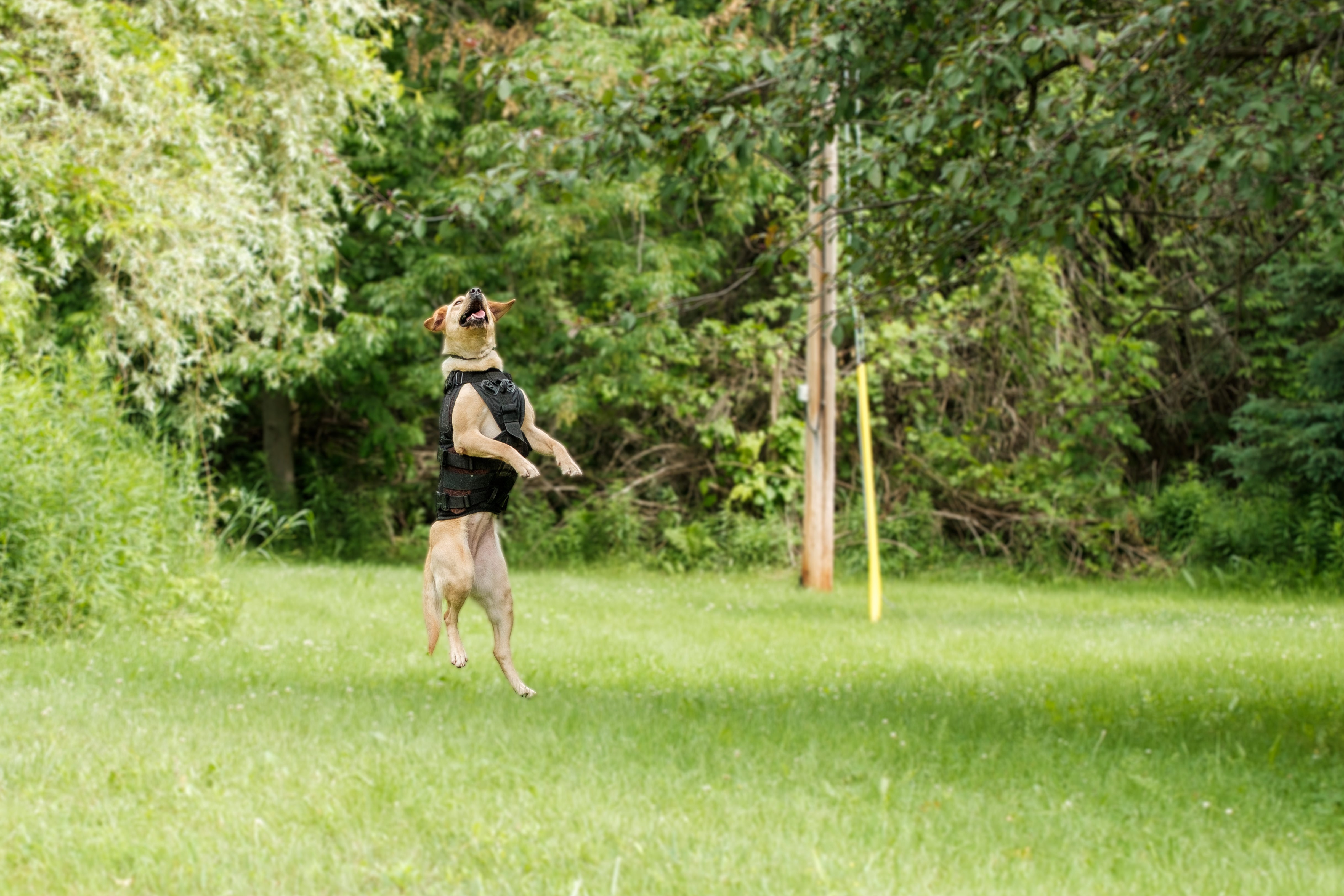
By tracking the edge of that falling “scent cone,” Tilly can guide handlers to within about ten feet of an infestation, dramatically narrowing the search area and allowing staff to pinpoint the source more quickly.
To Tilly, tracking down highly destructive pests is simply the ultimate game. “It’s nice to think that she has a moral compass to find invasive species, but that’s not the case,” Pallotta laughed. “She’s just doing it because she loves the love and affection and the toys and the food that she gets.”
A Game-Changer for Conservation
“It’s primarily a lot of visual inspection going through to individual trees,” Lee Merrill explained, describing the current way of searching for invasive species. “You can imagine, it’s quite labour intensive, and these things are really, really small and difficult to see, so it’s really easy to miss them when they’re at the early stages of infestation.” Now with Tilly, the pests can be found earlier when there’s a better chance to contain them.
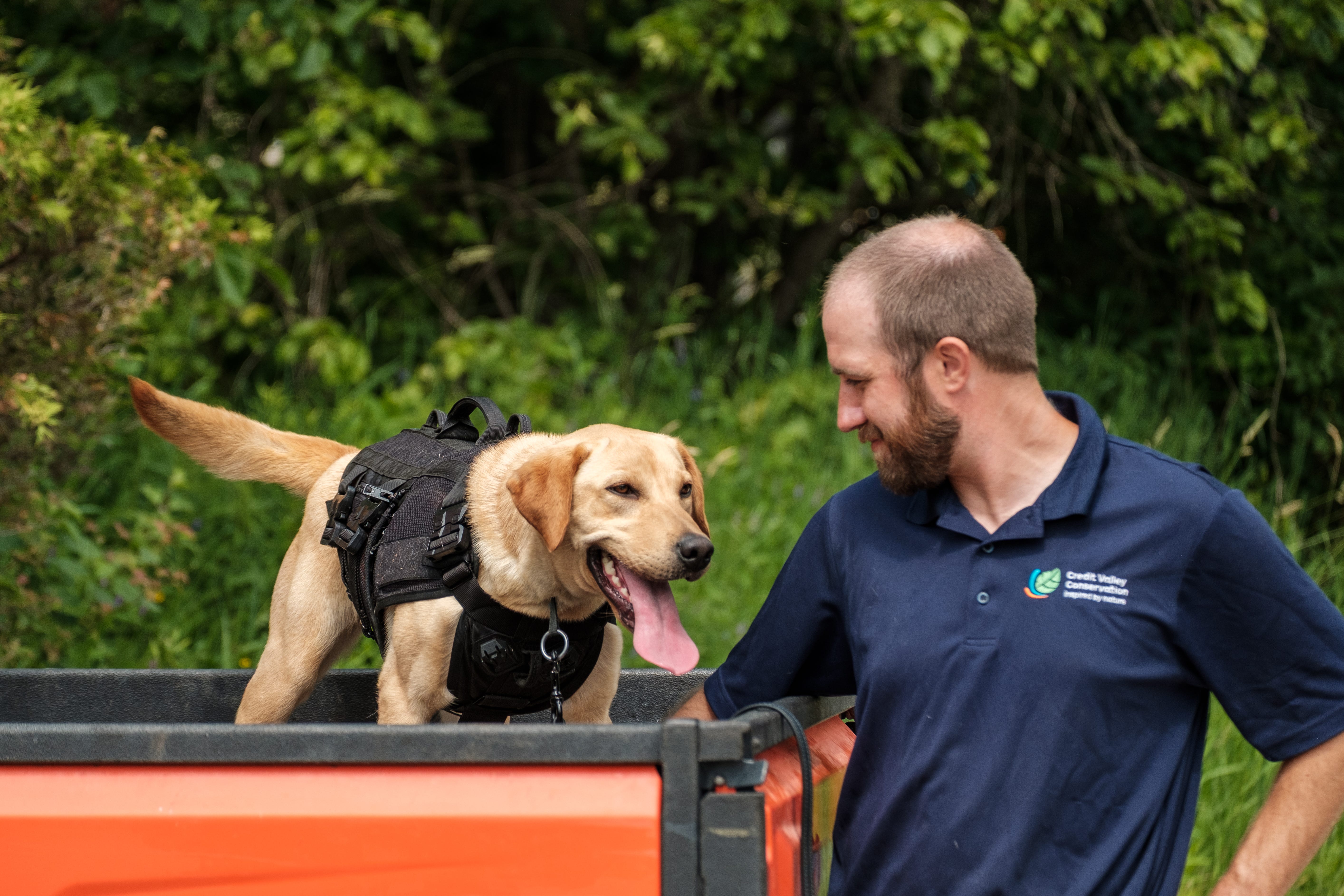
As her primary handler, Lee Merrill spends working hours and downtime with Tilly, fostering a deep trust that directly translates into the field. “She loves working, and she loves being on duty — honestly, that’s what she cares about,” Merrill said. “But she comes home with me and gets to be a normal dog and rest up.”
By finding invasive species earlier than conventional surveys, conservation staff hope to contain outbreaks before they spread through the watershed. CVC believes the program represents an important step in how invasive species are monitored.
“We’re just super excited at how innovative this first-in-Ontario kind of program is for us,” Merrill reflected. “Being able to leverage a dog’s skill set to implement early detection and have a rapid response so that we can protect our natural areas and green spaces — it gives them the best opportunity to thrive and [for] people to enjoy them.”
Follow The Field & Shutter Press
Instagram | YouTube | BlueSky
Have a tip, story idea, event, or want to appear as a guest column? Contact us.