


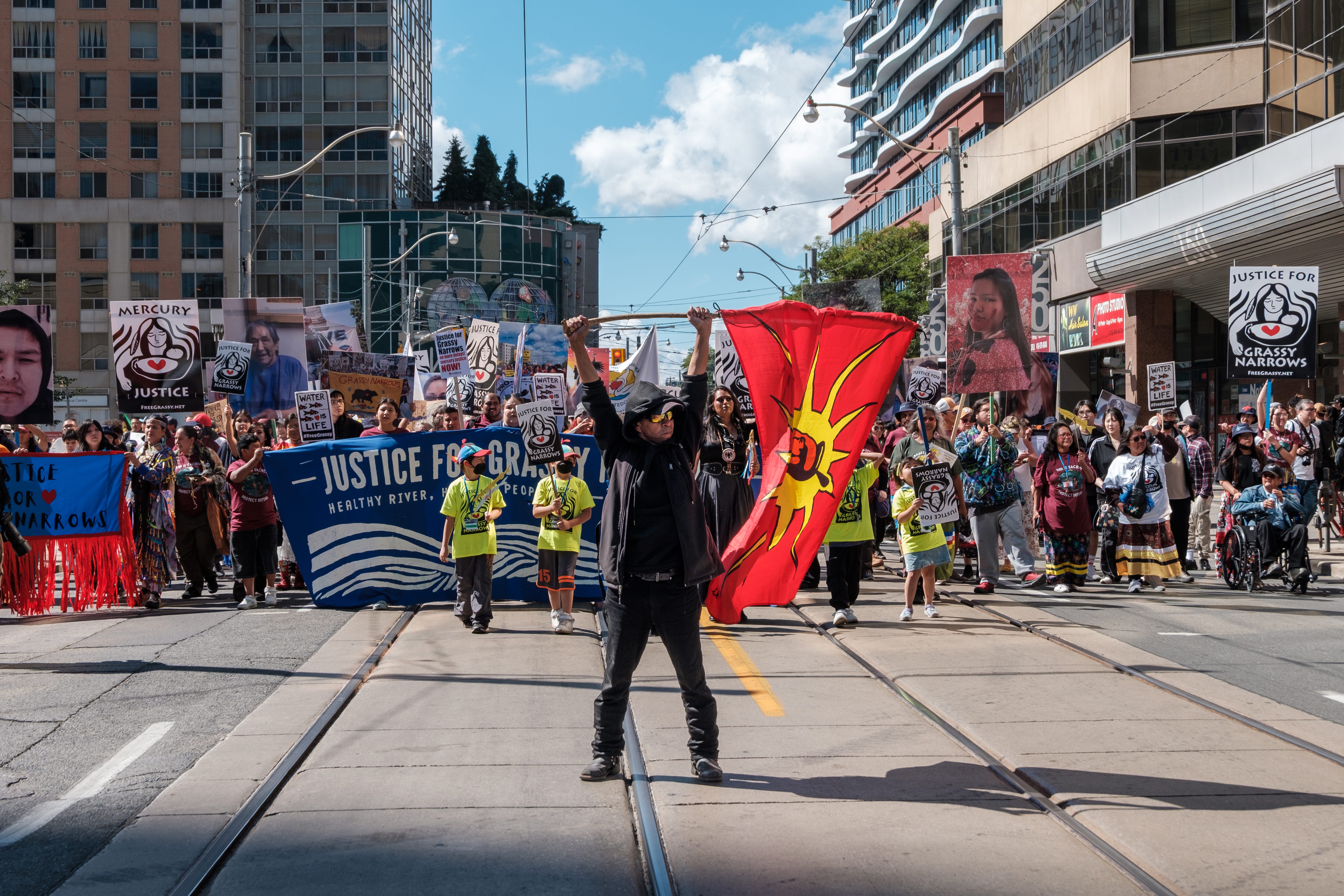
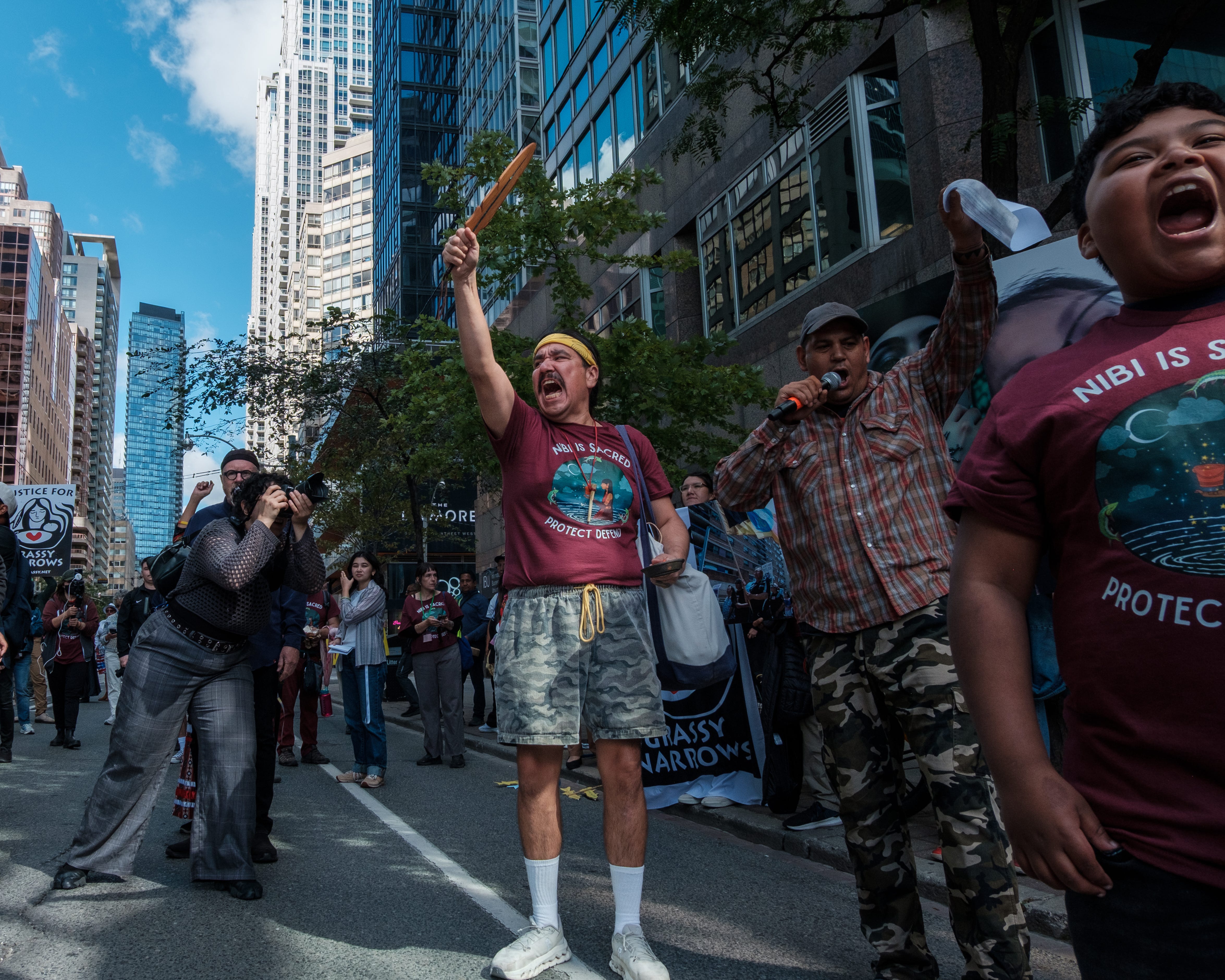
Asubpeeschoseewagong Netum Anishinabek (Grassy Narrows First Nation) community members, Wabaseemoong Independent Nation, and thousands of supporters rallied downtown Toronto on September 23, taking their decades-long fight for mercury justice directly to Queen’s Park.
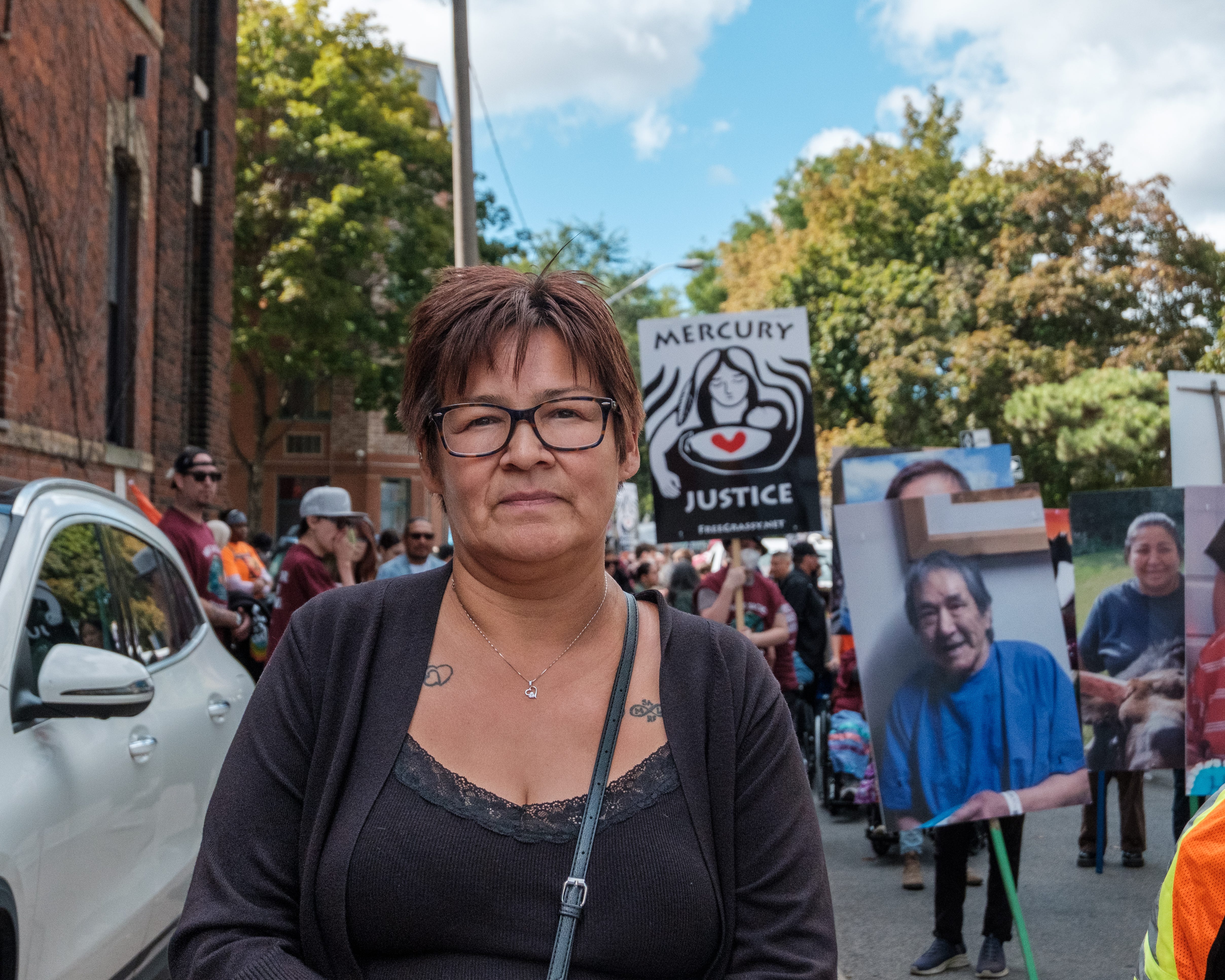
“Please, where’s your heart for our children, our people?” questioned Chief of Grassy Narrows Sherry Ackabee in an interview with The Field & Shutter Press. “Shut down the Dryden Mill, and give us our compensation. We’ve lost too many people, and we’re still continuing to lose our people.”
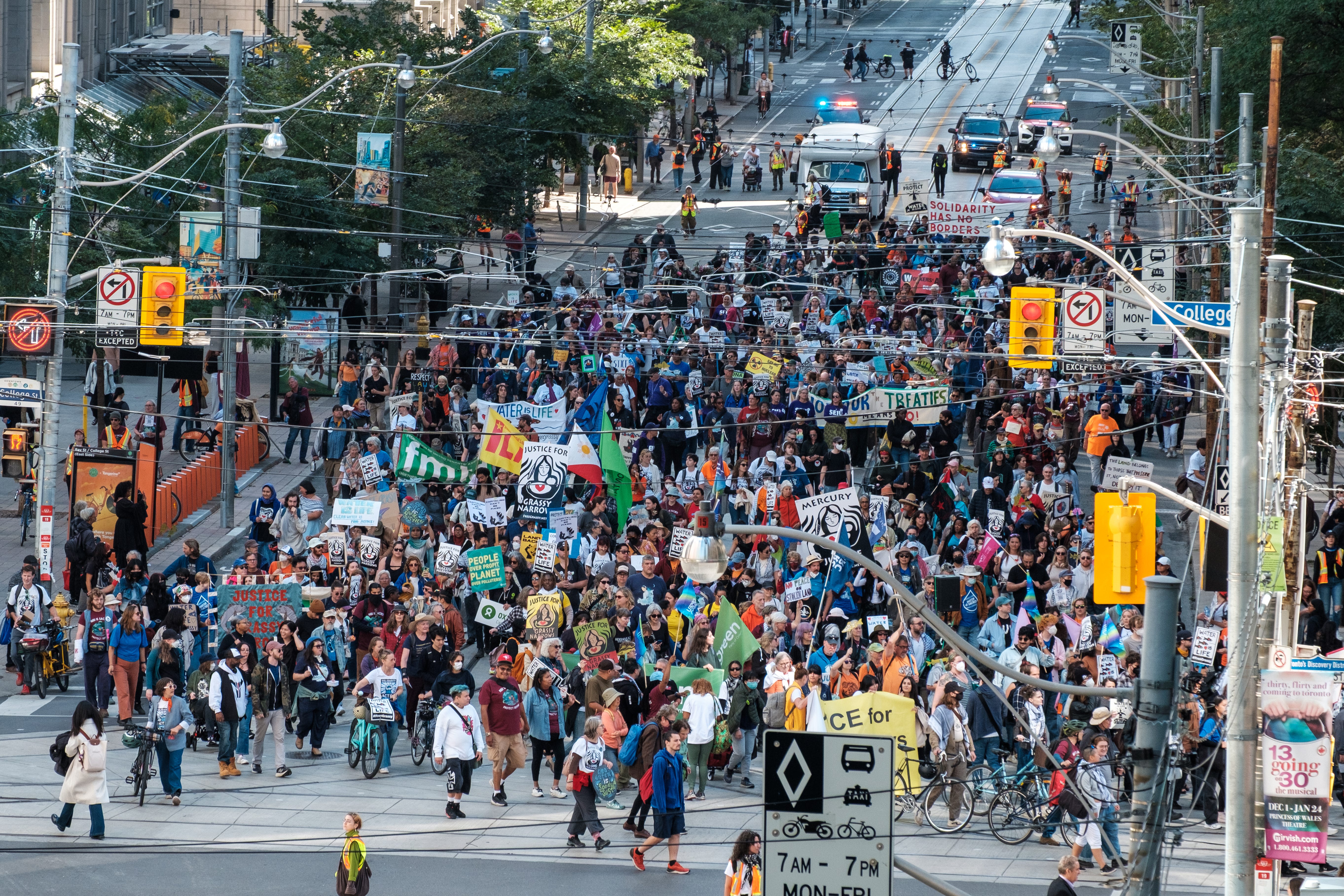
The River Run rally began at Grange Park and marched north to Queen’s Park, and included organizations such as political parties, environmental groups, and labour unions. Examples included the Ontario Green Party, Seniors for Climate Action Now, and the Ontario Public Service Employees Union (OPSEU).
The rally, which is held every other year, was attended by over 9,000 people, according to some estimates.


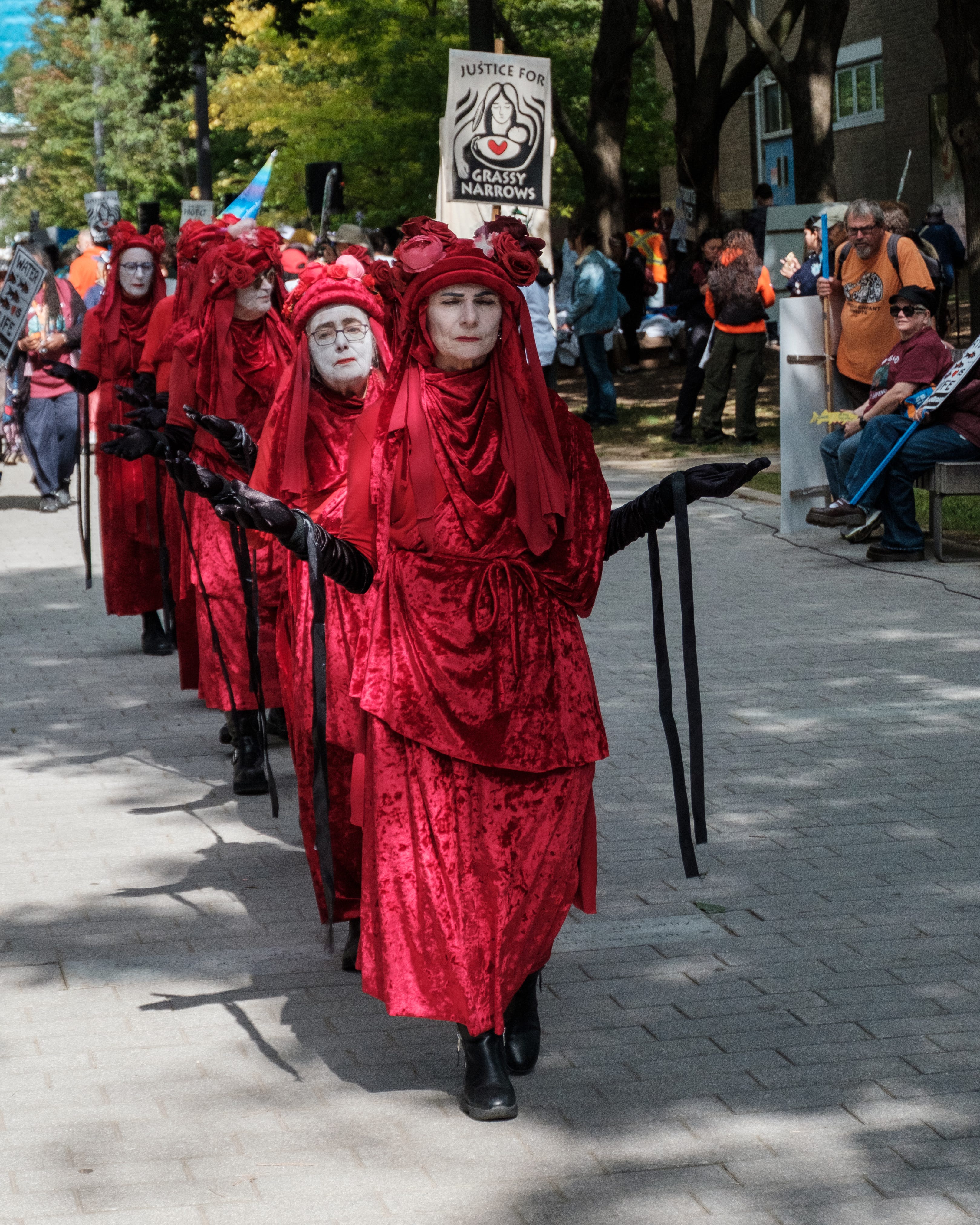
Toronto’s Red Rebels, who describe themselves as “a unique form of street theatre,” according to their website, were also in attendance.
A document provided to The Field & Shutter Press by River Run organizers on the day of the rally explained that Grassy Narrows had four demands for Premier Doug Ford and Prime Minister Mark Carney:
Compensate Grassy Narrows fairly for the ongoing mercury crisis,
Shut down the Dryden mill to stop the ongoing poisoning,
End industrial threats to Grassy Narrows (no mining, no nuclear waste),
Support Grassy Narrows in restoring their way of life and wellness from the damage that mercury has done.
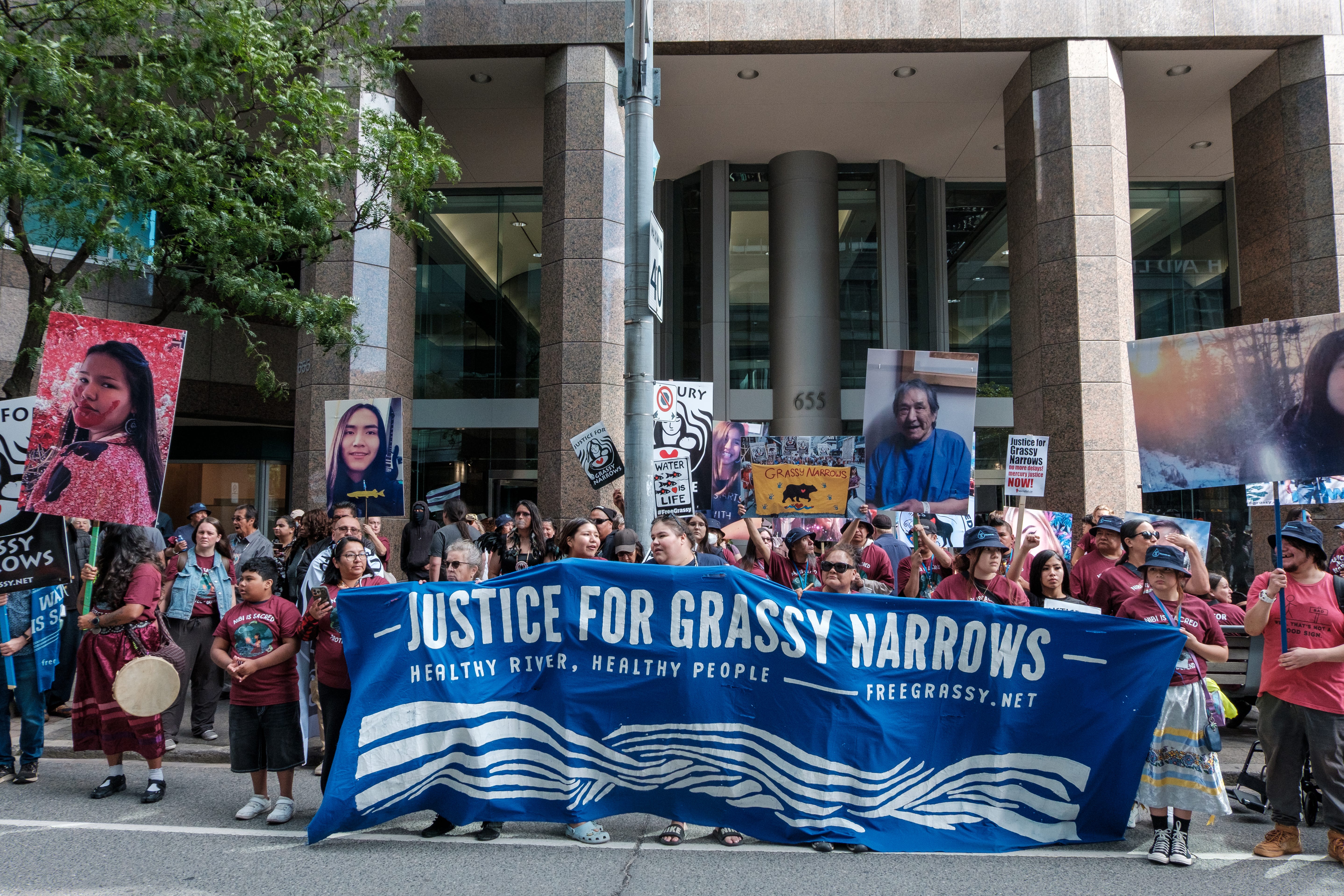
As the rally proceeded along its route, it paused outside Indigenous Services Canada at 655 Bay St. for a sit-in demonstration.
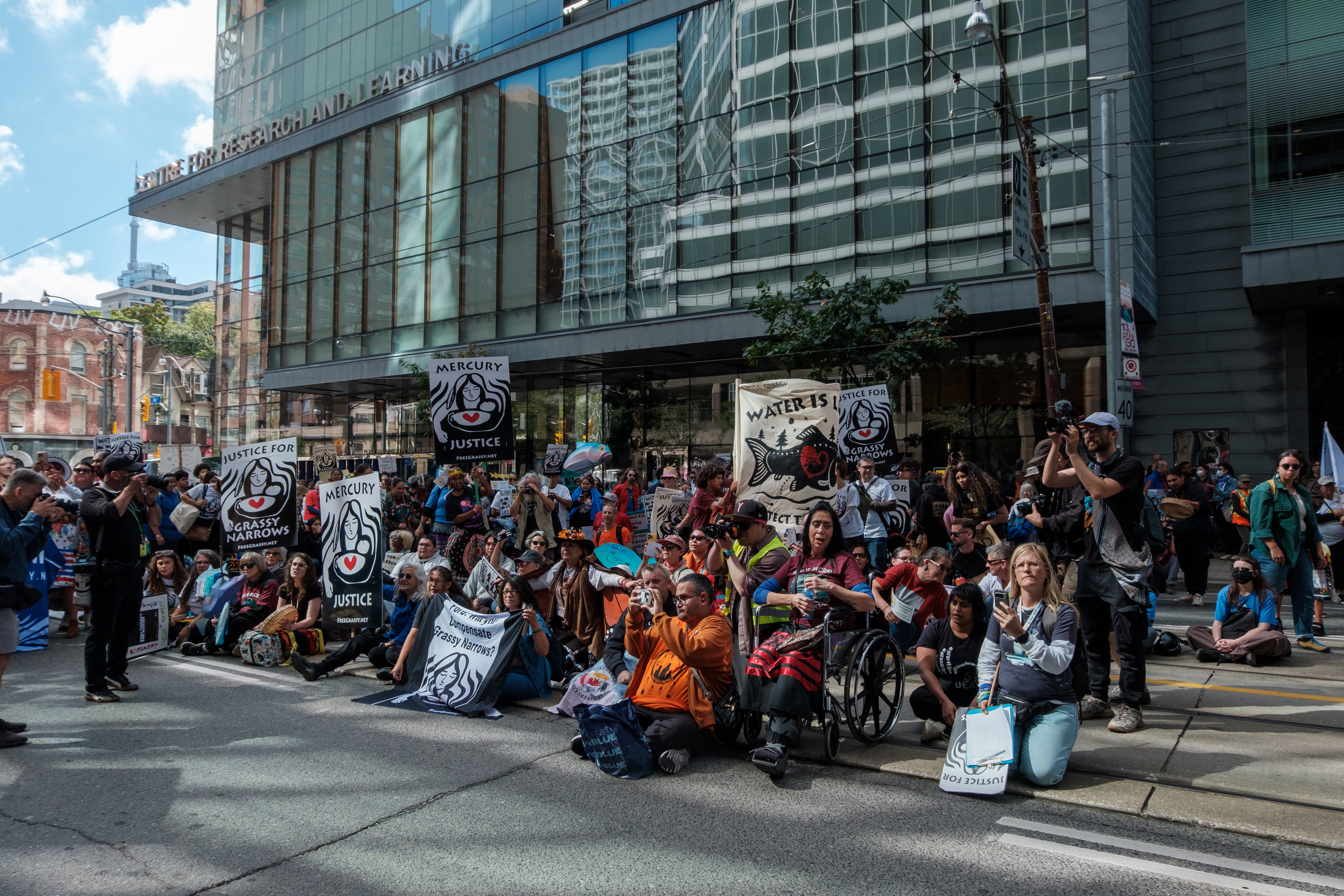
The day after the rally, Minister of Indigenous Services Canada, Mandy Gull-Masty, said in an emailed statement to The Field & Shutter Press that she was pleased to meet with Chief Ackabee from Grassy Narrows and Chief Fisher of the Wabaseemoong Independent Nation and their councils earlier this summer.
Gull-Masty further wrote that Indigenous Services Canada’s support “must translate into concrete action.”
“We are investing in new water and wastewater treatment plants that will address the conditions that led to the community’s long-term drinking water advisory and support the community’s long-term infrastructure needs, including future housing growth,” she wrote.
However, Gull-Masty did highlight that remediation of the English and Wabigoon River systems is being led by the Province of Ontario but that “Canada remains actively engaged.”
She also wrote that she and her team are “committed to continuing an open dialogue with the Chiefs and their representatives” as they work together to drive progress on the longstanding challenges the communities have faced.
The federal government supported the start of construction of a Mercury Care Home and Wellness Centre in Grassy Narrows in March 2025. Indigenous Services Canada described it as a “specialized facility dedicated to addressing the community’s unique health needs associated with mercury exposure due to pollutants released into the English-Wabigoon River system,” according to a release.
When completed, the facility will provide primary and long-term care services for those affected by mercury exposure.
The day before the rally, The Field & Shutter Press reached out to the Ontario Ministry of the Environment, Conservation and Parks along with the Premier’s Office for a statement; neither provided one prior to publication.
The Ontario government established an $85 million trust in March 2018 to clean up the mercury contamination in the English and Wabigoon Rivers systems.
Deputy Leader of the Ontario Green Party and MPP for Kitchener Centre, Aislinn Clancy, was present at the rally. When asked about Premier Doug Ford’s treatment of Grassy Narrows, she said that it shows his priorities lie “with big corporations and standing on his own soapbox without interruption.”
“He doesn't care about the environment. He doesn't care about Indigenous people. These are people who have been seriously harmed by a corporation, and it's up to the government to stand and protect this kind of environmental atrocity and humanitarian crisis. And he just treats them like a mosquito that he's swatting away,” said Clancy.
In an ongoing campaign of targeted messaging, activists have regularly surfaced at the Premier's events province-wide, deploying banners to demand compensation for the ongoing crisis, as first reported by The London Free Press.
Decades of mercury contamination
In the 1960s and 1970s, nearly 10 tonnes of mercury were discharged by an upstream chlor-alkali plant, part of a paper mill, contaminating the English-Wabigoon River system, affecting the ecosystem and the people who relied on it.
Wabaseemoong Independent Nation is located along the same mercury-contaminated river system as Grassy Narrows, approximately 98 km north-west of Kenora. They experience similar effects as Grassy Narrows.
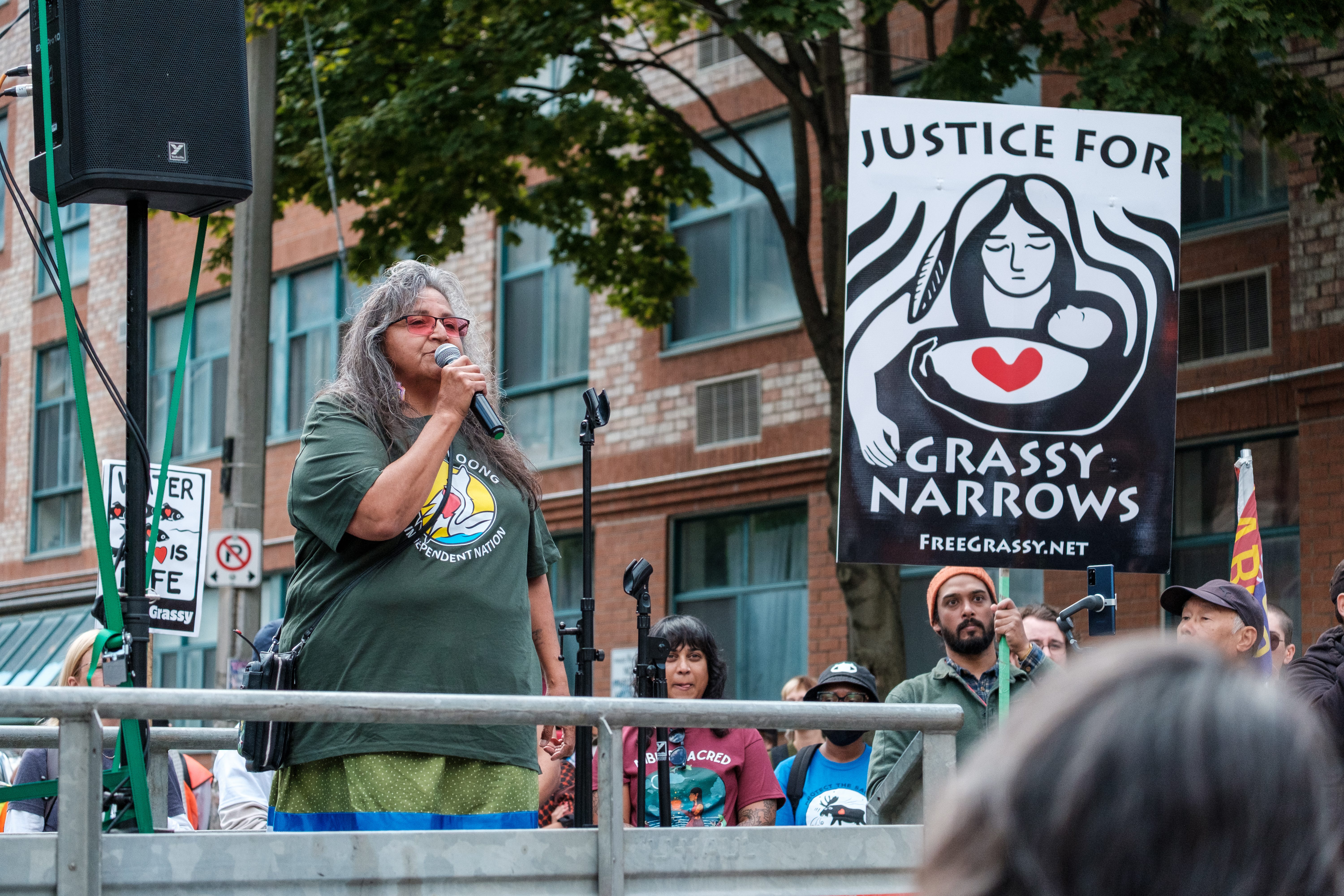
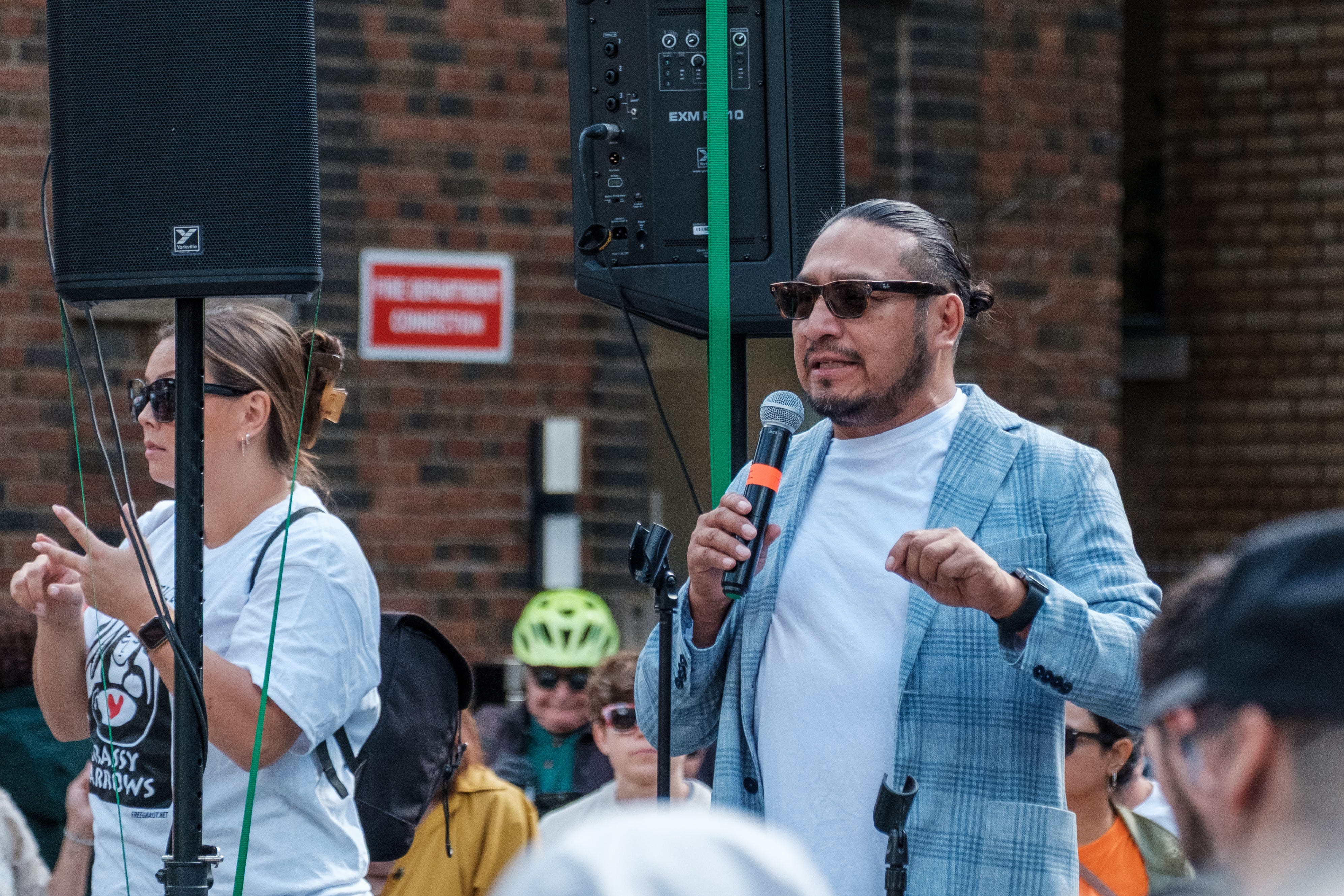
“You know, it's killing our people because everybody in our community has a short lifespan, and a lot of our people are getting sick, and you know our people are dying as well,” said Councillor Roanna Carpenter-Jourdain from Wabaseemoong Independent Nation.
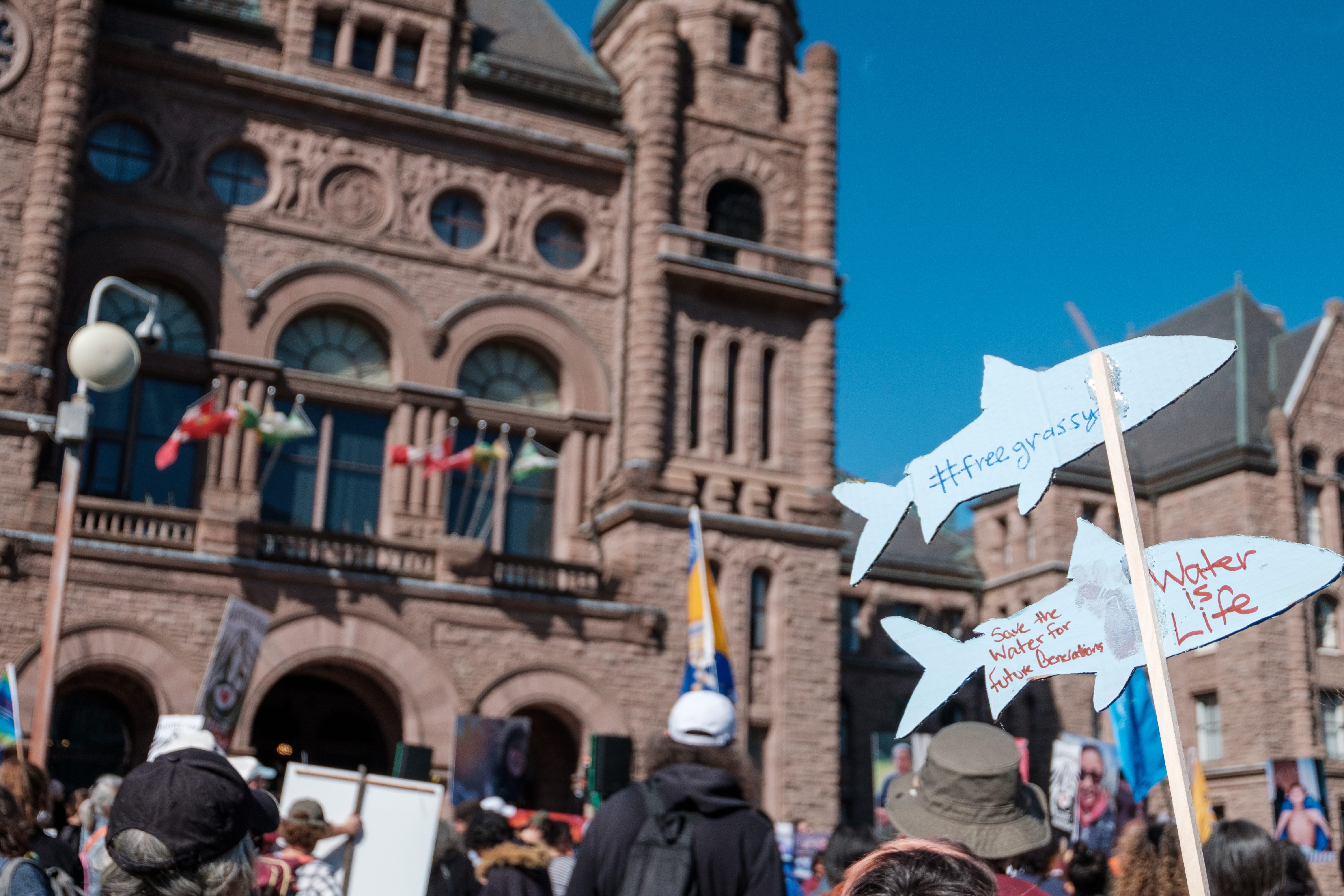
The discharge of mercury from the chlor-alkali plant stopped as it was decommissioned in 1975. However, researchers have found that wastewater from the current mill’s operations still poses risks.
A 2024 study from Western University found that water discharged by the mill contains sulphates and organic matter that interact with legacy mercury in the river system, promoting the formation of methylmercury, a highly toxic form of mercury.
“Dryden Mill industrial wastewater that is discharged to the Wabigoon River is making the mercury contamination in fish worse than it would be if it were not present,” wrote Dr. Brian Branfireun in the study.
Dr. Branfireun also wrote that eliminating the discharges would reduce the amount of methylmercury produced in the river system and the amount that accumulates in fish.
In the lab, that harm shows up as elevated methylmercury in tissue samples. In Grassy Narrows, it shows up as lost traditions. “We’re river people,” said Chrissy Isaacs, a grandmother, mother, and member of Grassy Narrows. “We should be able to just go into our lakes and our rivers. It makes it difficult today to keep up those traditions when we’re not allowed to have that.”
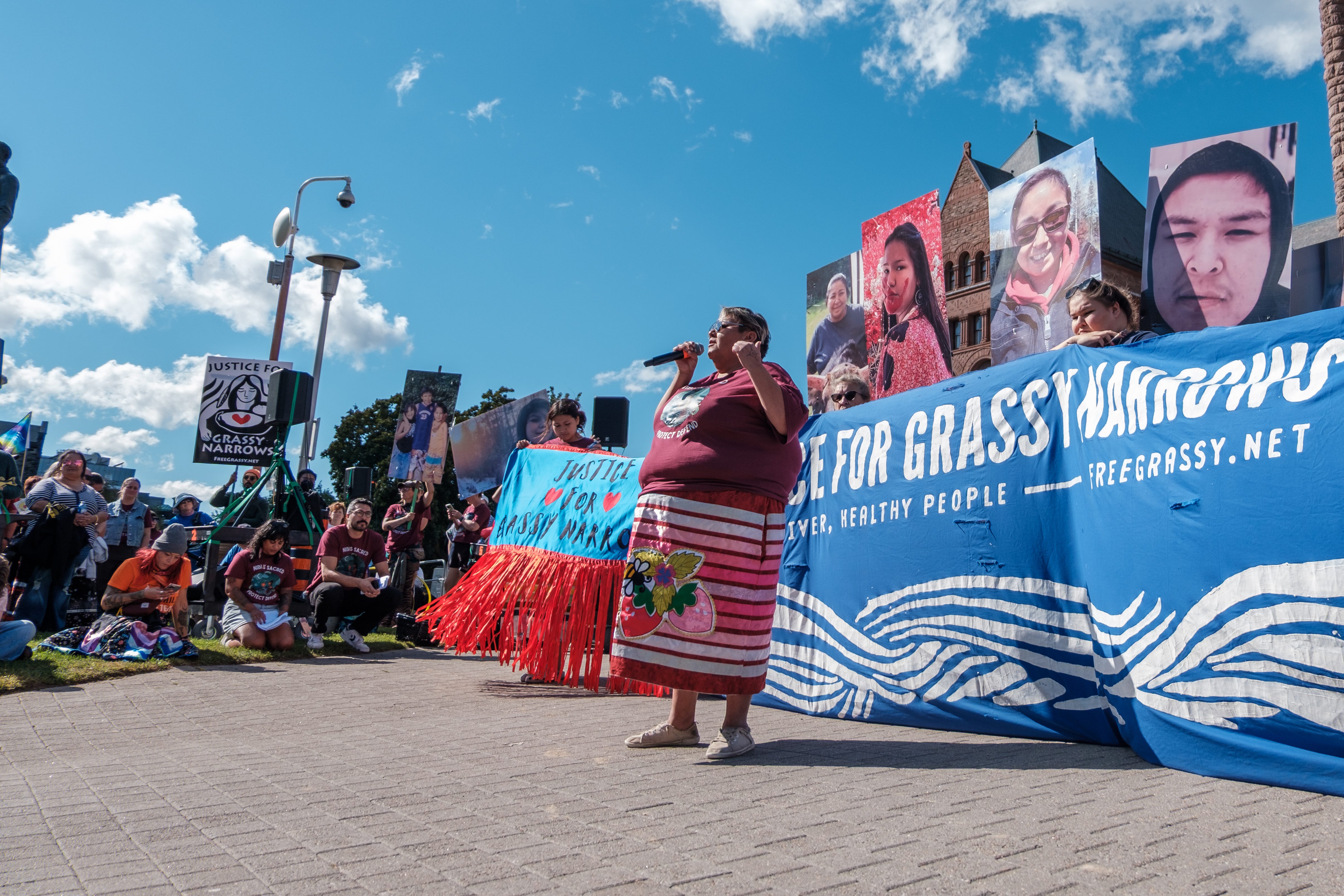
That change reaches into some of the most culturally important parts of life, including pregnancy and birth. “The fish broth for new mums has a lot to do with what we’re feeding our babies,” she explained. “What they tell us is it helps bring in that [breast] milk, but it also has everything that the baby needs for their brain development and their whole little being.”
Michael Fobister, a member of the Land Protection team in Grassy Narrows, said fish “is our way of life,” something they’ve had in their diets for “thousands of years.”
“It was promised by the government, like the treaties, that we have the right to hunt and fish, so government poison the river, poison our fish, now we can’t eat the fish,” he said. “We still eat the fish, not in great amounts, so it’s still affecting us.”
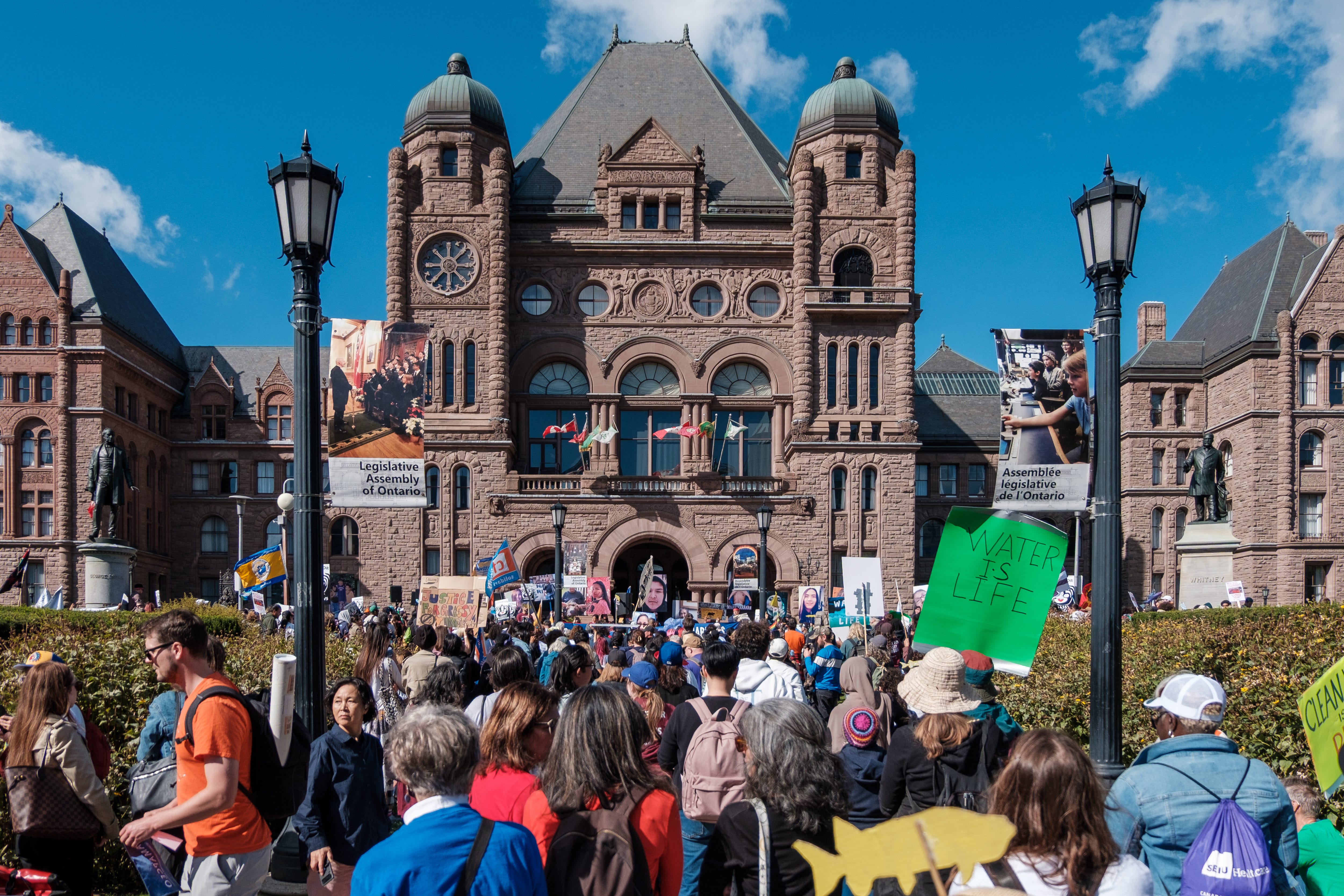
Travelling to town for groceries is a struggle for many Grassy Narrows community members.
“Most of our people are unemployed. They struggle to get into Kenora or any other town to get food. So that’s what we rely on is our land and water, our fish, our moose,” he explained.
For decades, Grassy Narrows has called for justice, remediation and an end to the threats facing their land and water. For Chief Sherry Ackabee, however, the loss cannot be measured.
“If I had one wish, I wish I could have all my people back that left too early.”
Follow The Field & Shutter Press
Instagram | YouTube | BlueSky
Have a tip, story idea, event, or want to appear as a guest column? Contact us.