


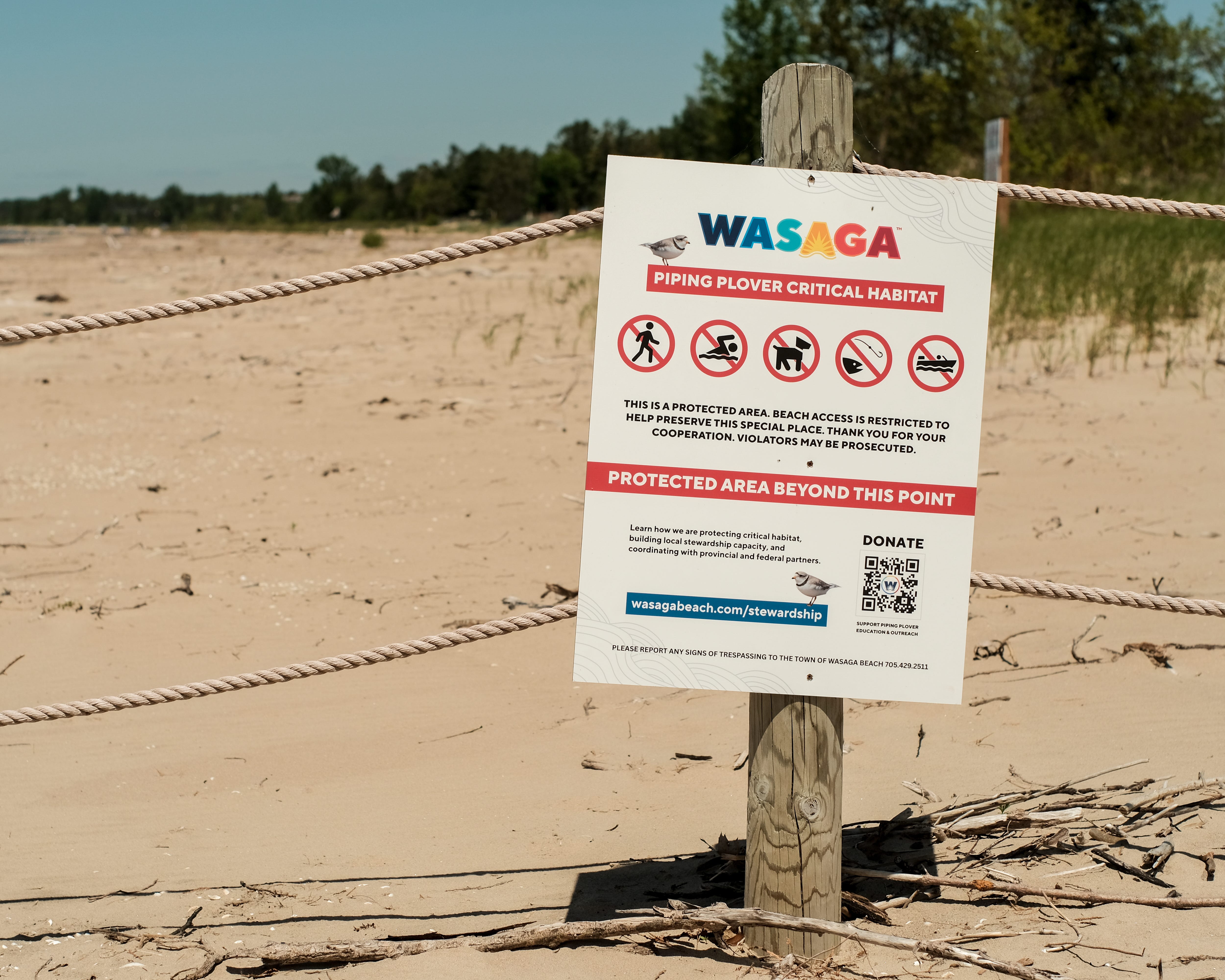
The Town of Wasaga Beach has filed an undertaking with the Federal Court that it will cease construction activity, mechanical beach raking and the use of some motorized vehicles within the Piping Plover habitat in Beach Area 1 until October 31.
In the undertaking submitted electronically on August 13 by one of the Town’s legal representatives, Timothy Hill of Aird & Berlis LLP, the Town said that an injunction was “not warranted in the circumstances” and that the undertaking was being made “solely for the purpose of avoiding an unnecessary injunction motion.”
When reached for comment by email, Sandra Watts, General Manager of External Relations and Director of Communications for the Town of Wasaga Beach said the undertaking is not a “fundamentally new approach to beachfront stewardship,” explaining that even before the undertaking, “the Town has been clear that environmental stewardship and the protection of Piping Plover critical habitat are priorities.”
Watts highlighted the Town’s commitments to maintaining established conservation practices, and the expansion of its “on-the-ground stewardship program”, which saw a new Beach By-Law, the introduction of Piping Plover technicians employed by the Town, and working with “conservation partners and regulatory agencies.”
“Most of the undertaking simply confirms practices the Town was already following in Beach Area 1 and is consistent with the Town’s clear and ongoing commitment to protecting Piping Plover critical habitat,” she wrote.
When asked why the October 31 deadline was chosen, she explained that it’s intended to be in place “while the court application proceeds, which is expected to be resolved by that time.” Even after that deadline, “the Town’s ongoing stewardship work and commitment to protecting Piping Plovers and their critical habitat will continue.”
The Field & Shutter Press obtained a copy of the undertaking filed electronically with the Federal Court in matter T-1951-26.

What’s an undertaking, and what does it accomplish?
Joseph Castrilli, a lawyer with the Canadian Environmental Law Association, who is not involved in the Wasaga Beach litigation, explained the difference between an injunction and an undertaking in an interview with The Field & Shutter Press.
An undertaking “is simply a promise,” he said, while an injunction is “a court order, and it directs the parties that it’s focused on to either do something or refrain from doing something.”
While an undertaking is not a court order, violating it can still carry its own consequences.
“If there’s a breach of the undertaking, the party—I’ll call the party who received the undertaking—could actually apply to the court for a contempt citation,” explained Castrilli. This wouldn’t be automatic, however, and the court would have to determine it.
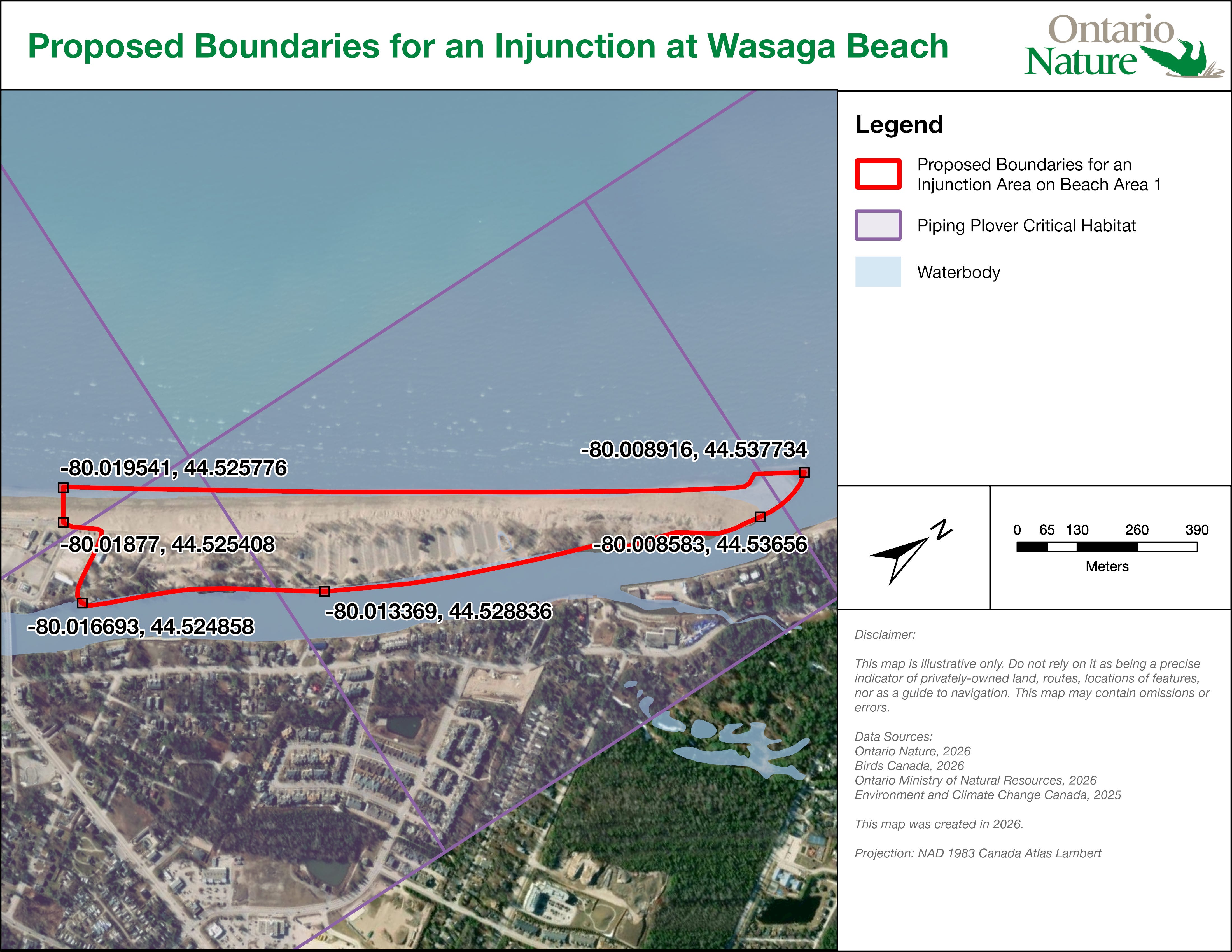
The undertaking applies to a portion of Beach Area 1 East of Spruce Street, defined in “Schedule A” of the document, which includes the Area of Natural and Scientific Interest. In that area, the Town has committed to refrain from mechanical raking and construction activities on the beach. It will also refrain from using motorized vehicles outside designated roads and parking lots, except for emergency vehicles, and from removing sand or vegetation from areas surrounding parking lots and parking medians, subject to actions reasonably required to address emergency conditions.
The Town remains at liberty to sweep paved asphalt areas of parking lots and designated roads as required, according to the undertaking.
This will remain in effect until October 31, “unless voluntarily extended by the Town in writing,” it states.
Why do the plovers need Wasaga Beach, and what about the court case?
“Wasaga Beach is the most important beach for Piping Plovers in Ontario,” explained Sydney Shepherd, Ontario Piping Plover Program Coordinator with Birds Canada, in a previous email to The Field & Shutter Press. She also explained that if the area east of Spruce Street was altered, such as through raking or development, “Piping Plover will be left vulnerable to predators, without food, or without places to raise their families.”
Birds Canada says about one-third of Ontario's breeding Piping Plover population has originated from Wasaga Beach.
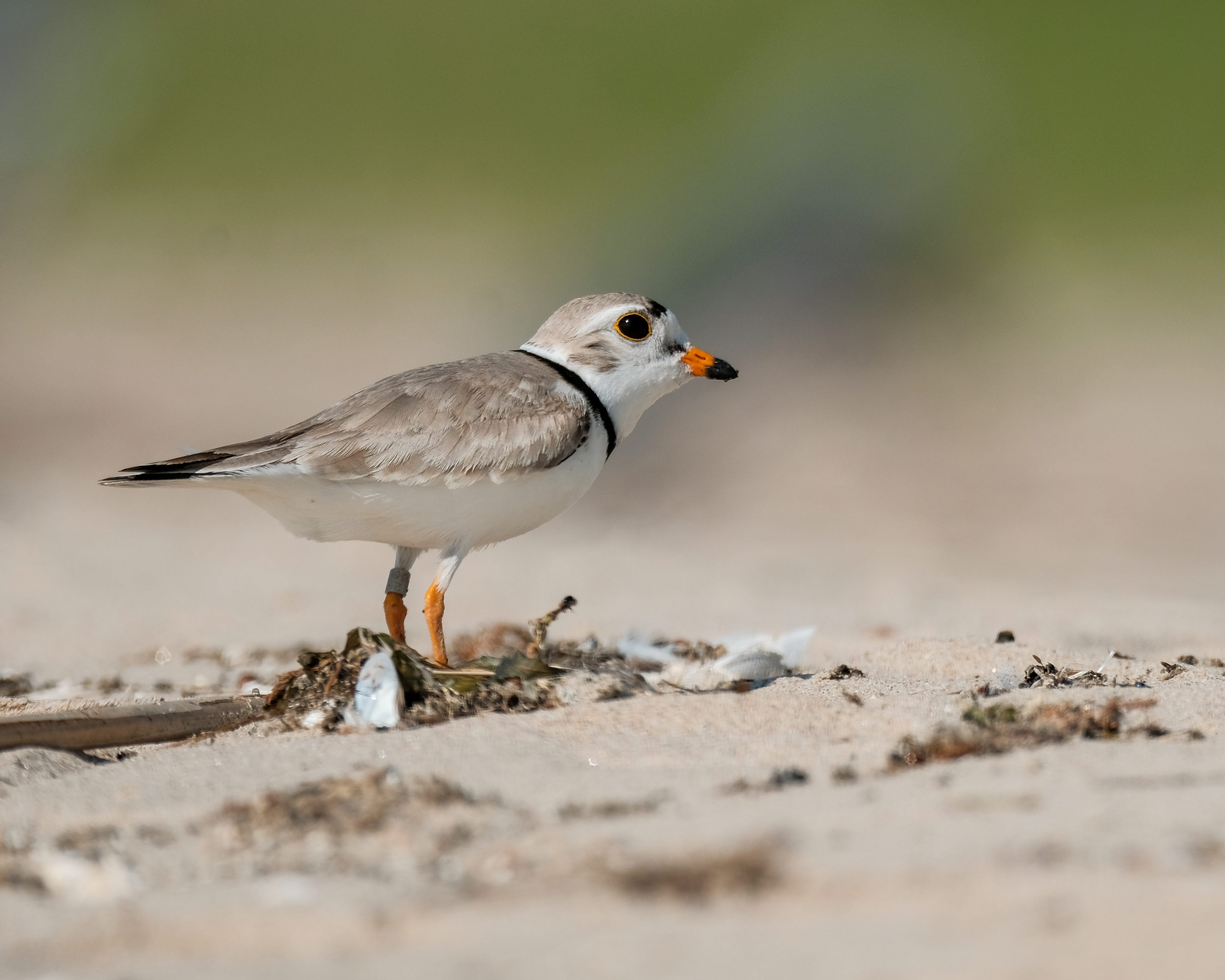
The undertaking comes after Ecojustice, on behalf of Ontario Nature and Environmental Defence, had sought an interim injunction on July 21 to “immediately halt mechanical beach raking, sand dune clearing, motorized vehicle use, and other activities,” as part of a judicial review application challenging the federal Environment Minister's delay in recommending emergency protections for the habitat under the Species At Risk Act (SARA), according to a release.
In a press release on April 21, Brian Smith, Mayor of Wasaga Beach, confirmed that an area east of Spruce Street “was mechanically groomed in error on April 13.”
Despite the raking, Piping Plovers did return to Wasaga Beach in 2026, although their nesting season was unsuccessful due to bad weather.
Kegan Pepper-Smith, a lawyer with Ecojustice, said in an email to The Field & Shutter Press on August 20, that he could not comment at this time, as “the parties have not yet finalized the undertakings with the Court.” He added, “Our clients remain committed to securing binding protection for the Piping Plovers and their habitat on Beach Area 1, whether through undertakings or an injunction order.”
While the Town hopes the undertaking resolves the matter, the injunction application remains on standby, and the underlying Judicial Review remains ongoing. Ecojustice is asking the Court to order Minister Julie Dabrusin to recommend that an emergency protection order be issued under SARA. The legal action was announced on April 20, with Ecojustice arguing that “a failure to act is very likely to result in the extirpation of the species from Ontario.”
You might also be interested in:

Follow The Field & Shutter Press
Instagram | YouTube | BlueSky
Have a tip, story idea, event, or want to appear as a guest column? Contact us.