


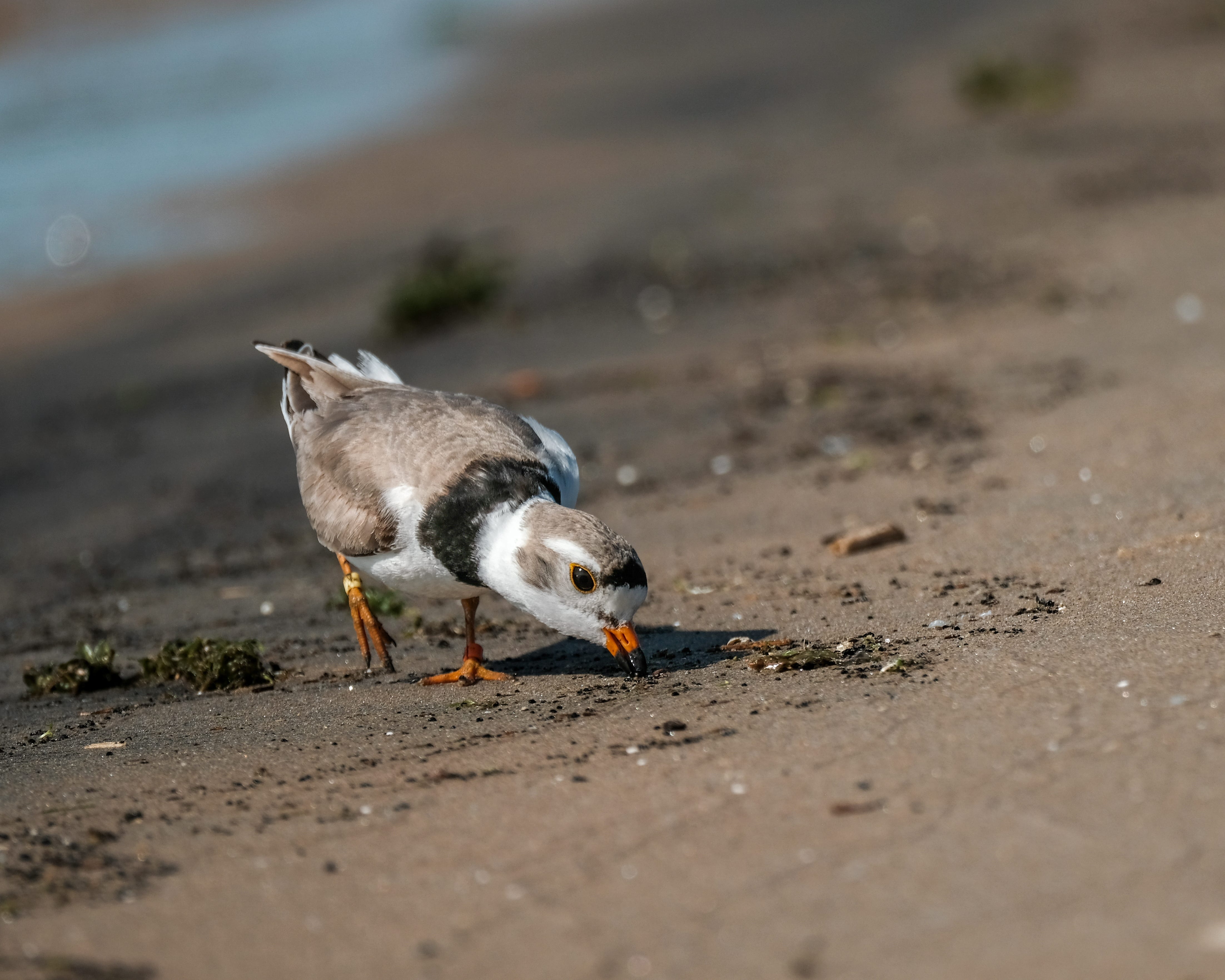
Environment and Climate Change Canada (ECCC) has found that Piping Plovers at Wasaga Beach are “facing an imminent threat to their recovery from beach management activities,” according to an assessment published on November 10.
Wasaga Beach serves as an important nesting and recovery site for Piping Plovers, a small white and brown shorebird. The Ministry’s assessment describes it as the “most consistent and productive nesting site in Ontario.” Once considered extirpated, meaning locally extinct in Ontario, the birds returned in 2007 after a nearly 30-year absence and began nesting at Wasaga Beach in 2008.
Wasaga Beach has been responsible for “39% of breeding pairs (51), 37% of nests (59) and 46% of fledglings (87) in Ontario since 2008,” the report noted.
The assessment followed a January 27 request from Ecojustice, an environmental law charity, on behalf of Environmental Defence and Ontario Nature, asking Federal Minister of the Environment, Julie Dabrusin, to recommend an emergency protection order for the plovers.
Beach management practices raised concerns
The groups became concerned about mechanical raking of the Piping Plover habitat after changes to provincial endangered species laws and Wasaga Beach Provincial Park boundaries were made.
Mechanical raking is a process that uses specialized equipment to remove seaweed, driftwood, garbage, and other debris from the shoreline. Although it can improve the beach’s appearance for visitors, it can negatively impact the plovers’ nesting and foraging.
Under the proposed plan in 2025, Beach Areas 1, 2, New Wasaga, and Allenwood Beach were removed from Wasaga Beach Provincial Park and are slated to be transferred to the Town, with the municipality taking over beach management for the locations this year.
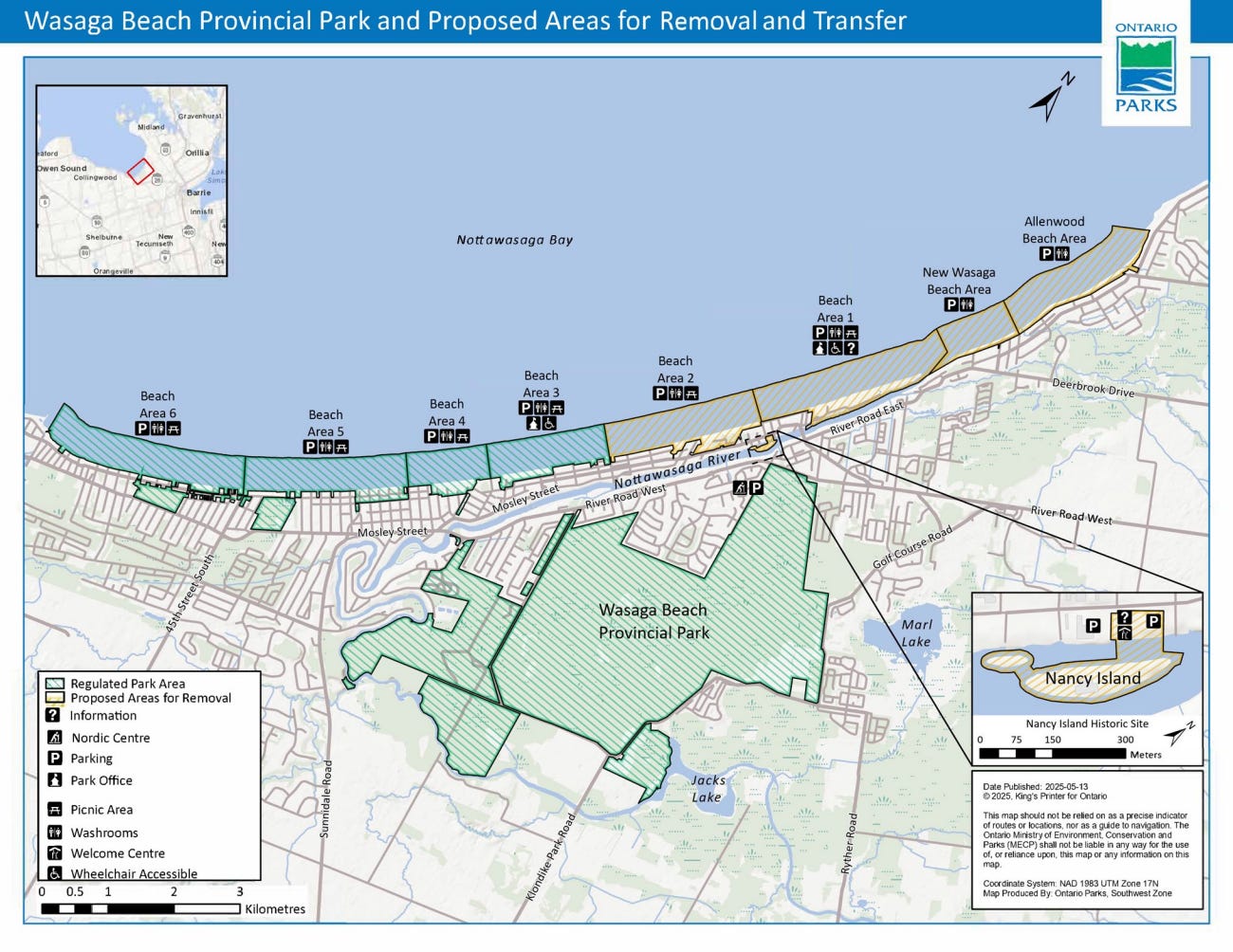
Over a 45-day period, the proposal received 14,233 comments through Ontario’s Environmental Registry, approximately 98% of which opposed the proposed removals, citing concerns including environmental impacts, legal issues and public access.
Despite this, the Ontario government posted a response which said, “We did not consider any changes to the proposal based on the feedback received, given the Town of Wasaga Beach’s commitments to keeping the beach public, not building on the beach, and protecting environmentally sensitive dunes.”
It further explained that the lands removed from Wasaga Beach Provincial Park “will continue to be subject to Ontario’s species protection and environmental laws.”

The Field & Shutter Press contacted the Ontario Ministry of the Environment, Conservation and Parks (MECP) for comment and to ask whether it plans to act on the report's findings. Although MECP acknowledged the request, it did not provide a response before publication.
On April 21, Mayor Brian Smith of Wasaga Beach released a statement acknowledging the Town had raked a portion of Beach 1 on April 13 “in error.” He said to prevent recurrence, the Town implemented “symbolic fencing and interpretive signage” to identify and protect sensitive areas, reinforced directions with all staff, and implemented controls for oversight on beach operations, according to the release.
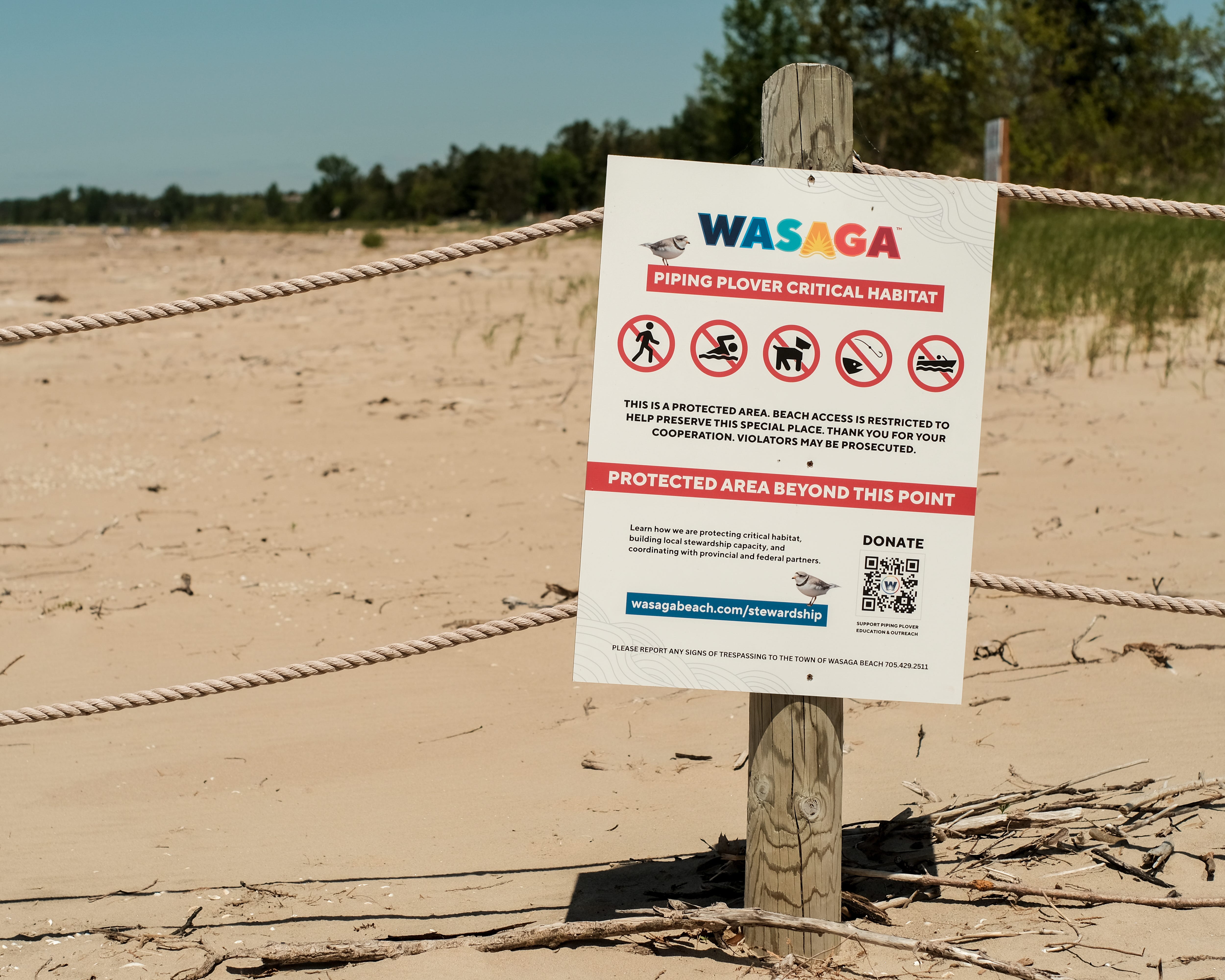
The raking prompted Ecojustice to file a lawsuit on April 20, on behalf of Environmental Defence and Ontario Nature, requesting a Court order that Minister Dabrusin make recommendations for an emergency order under the Species at Risk Act (SARA).
The Minister had still not made that recommendation despite the groups’ request in January.
Ecojustice said in a release that, for months, legal and wildlife experts had warned the Federal Minister that she needed to recommend the order “as Ontario’s withdrawal from protecting this habitat has triggered an imminent threat to the survival and recovery of the species.”
In August, through a legal undertaking filed with the Court, the Town committed to refraining from any mechanical raking, construction, and the use of some motorized vehicles until October 31.


The case was scheduled for a hearing on November 5. However, it was “adjourned pending further order or direction of the Court,” according to the Federal Courts website. (Court# T-1951-26)
The purpose of the assessment is to help Minister Dabrusin form an opinion to recommend an order, a requirement under SARA, using a framework known as the “Imminent Threat Policy.”
What the assessment found
The assessment concluded that Environment and Climate Change Canada is “of the view that the Piping Plover circumcinctus subspecies is facing an imminent threat to its recovery from beach management activities at Wasaga Beach, Ontario.”
It says that the transfer of beach areas away from Ontario Parks and to the Town of Wasaga Beach, “uncertainty” regarding beach management practices in plover habitat for 2027, and changes to provincial species at risk legislation that removed provincial protections, “have collectively created conditions for the species to face new and intensifying threats at Wasaga Beach, Ontario.”
Beach management activities, like mechanical raking, can “compact soils and remove debris and vegetation that is necessary for the species.” If this occurs within the critical habitat or nesting areas for the plovers, the quality of the habitat “would be diminished such that it would no longer offer the necessary features to support the species’ critical life functions,” according to the report.
Habitat destruction caused by “beach management practices that are incompatible with the species would significantly reduce productivity and nesting success at this key site, counter to the population and distribution objectives identified in the species’ recovery documents, rendering the recovery of the species highly unlikely.”
It found that there are no “regulatory regimes or other measures in place to fully address the threat of incompatible beach management practices.”
As a result, “immediate intervention would be required until more permanent measures are implemented.”
The assessment suggests those measures “could include a formal conservation agreement between the federal government and the Town of Wasaga Beach,” or “a commitment by the Town to a long-term approach to managing the areas of the beach containing Piping Plover habitat that is compatible with the needs of the species.”
It did not find that the species faces an imminent threat to its survival, an important legal distinction. The report found that “immediate intervention is not required to address the threat of commercial development.” It further explains that the projects are concepts under the draft Destination Wasaga Master Plan, so there is “insufficient information to determine whether the existing protection measures would prevent or minimize impacts to Piping Plover.”
However, the assessment does note that “the threat of commercial development at Wasaga Beach may warrant re-assessment in the future.”
Town of Wasaga Beach responds
The Field & Shutter Press reached out to the Town of Wasaga Beach for comment on the report. Sandra Watts, the Town's Director of Strategic Communications, Destination Marketing & Intergovernmental Affairs, responded by email, saying the Town has already discussed the findings with federal officials, who have “been clear that their concerns focus on mechanical beach raking and the need for greater certainty around long-term habitat protection.”
She said the Town had been working on a long-term beachfront management plan before the report was released, and will continue working closely with the federal officials and its “conservation partners to build on the successful practices already in place.”
Emphasizing the distinction between a threat to a species’ survival and its recovery, she said the report found “no imminent threat to the survival of the Piping Plover.”
In contrast, the report did find an imminent threat to the recovery of the plover due to the Town’s beach management activities. The assessment highlighted Allenwood Beach, a plover habitat, where it described the Town as managing the beach “in a manner that is inconsistent with Ontario Park’s protocols for Allenwood Beach and is, therefore, incompatible with Piping Plover.”
“Importantly, ECCC’s [Environment and Climate Change Canada’s] report also acknowledges the Town’s conservation efforts, including strengthened beach management practices, new protections under our Beach By-Law and ongoing collaboration with conservation partners,” she wrote.
The practices included hiring two Piping Plover Technicians to monitor, collect data, and educate the public; recruiting volunteers; training Town staff with Birds Canada; and designating a “no rake” zone. “The Town’s collaboration with Birds Canada builds on work already underway with the Nottawasaga Valley Conservation Authority,” the Town said in a previous release.

However, the assessment also identified that the Beach By-Law contains provisions allowing the Town’s Chief Administrative Officer to exempt any person “from any of the provisions of the By-Law,” and did not contain “any provisions related to mechanical beach raking or other beach cleaning activities.”
Watts echoed Mayor Smith’s earlier statement that the April 13 raking was an isolated operator error that has not been repeated.
“No one cares more about the health, sustainability, and uniqueness of our beachfront than the Town and the people of Wasaga Beach,” said Watts. She added that the Town remains committed to working with federal officials and other partners to “strengthen long-term protections and continue delivering responsible local stewardship of the beachfront and Piping Plover critical habitat.”
Minister confirms emergency order recommendation required
Eleni Armenakis, a spokesperson for ECCC, confirmed in an email received after publication that Minister Dabrusin, on October 29, “determined that the Piping Plover circumcinctus subspecies is not facing imminent threat to its survival but is facing imminent threats to its recovery.”
“Having formed this opinion, the Minister is required under the Species at Risk Act to recommend that the Governor in Council make an emergency order,” she explained.
Armenakis said they will consult with the Town, the Ontario government and potentially affected First Nations to inform that recommendation. The ministry could not speculate on when Cabinet might make a decision.
Environmental groups urge swift federal action
Andrew Cleland, a staff lawyer with Ecojustice, explained in an email to The Field & Shutter Press that Minister Dabrusin has acknowledged her obligations. However, he noted that legal counsel for the Minister has advised the court she is “in the process of finalizing a recommendation package to Cabinet.”
Cleland further explained that his clients, Environmental Defence and Ontario Nature, will continue to engage with the Minister “to ensure that the emergency protections are adopted as swiftly as possible.”
He said the groups are keeping their legal options open, “to hold the Minister accountable to her obligations to this species on the brink, including proceeding with the postponed hearing to obtain a court order to compel her to recommend the emergency order to Cabinet.”
With Wasaga Beach accounting for nearly half of Ontario’s Piping Plover chicks since the birds returned to the province, Cabinet’s decision on whether to issue an emergency order could have significant implications for the species’ future in Ontario.
Editor’s note (November 17, 2026 at 10:30 am): Following publication, The Field & Shutter Press received confirmation from Environment and Climate Change Canada that Environment Minister Julie Dabrusin formed her opinion on Oct. 29. The article has been updated to include this information in the section titled "Minister confirms emergency order recommendation required."
Follow The Field & Shutter Press
Instagram | YouTube | BlueSky
Have a tip, story idea, event, or want to appear as a guest column? Contact us.